Wednesday, June 6, 2012

Is cooking the silver bullet to the obesity epidemic?

Microsoft Office Image

Many writers (e.g. Mark Bittman), journalists, researchers, scientists, and celebrity chefs (e.g Jamie Oliver), believe that if people cooked more, obesity wouldn't be such a big issue. While I agree with this observation generally and feel that it could probably be good for the environment too, I don't think it is something that on its own could ever be effective in our capitalist society.

First, how can cooking our own meals help the obesity epidemic? Meals and snacks eaten outside of the home generally have more calories than those made in the home. Simplistically, if you consume more calories than you expend on a regular basis, you're going to gain weight. There is also some evidence that eating more frequently outside of the home is related to an increased body weight. Preparing your own meals also cuts down on packaging, particularly if you eat a lot of fast food, which is better for the environment. And preparing your own meals means just that - as Yoni Freedhoff recently commented, nuking something doesn't count.

Cooking is a skill. It requires time. I've frequently heard that cooking skills have been on the decline (although I can't give a you specific source for that). I'd guess, because they're not necessary anymore (abundance of prepared, tasty food), and perhaps due in part (please feminists don't hate me) to the emergence of the two-working-parent family; the housewife social norm is disappearing. People, therefore, need to be taught how to cook; and to cook food that tastes at least as good as what could be bought pre-made. Where and how would this happen? Sure,we can get at kids in schools, but what about their parents? Adults are a less captive audience. Second, people don't feel like they have time.  They're stressed. Everyone is. But, this is particularly tough for people on lower incomes, trying to make ends meet. They know the value of healthy eating but lack time and resources. Thus, sometimes being able to get prepared foods for relatively cheap is valued much more highly than cooking skills and being able to cook one's own meals. Some people can't even afford places to live that have enough room for cooking equipment anyway. Given the current state of global economic affairs, I imagine, that these scenarios will only become more frequent.  

If we want to people to cook more, it's not simply a matter of setting up social marketing campaigns and saying "hey you guys, you should cook more." There needs to be education programs in schools, the workplace, and the community, as well as changes in policies to support those trying to get by (minimum living supplement, housing and energy subsidies, etc.), workplace policies that are family friendly, egalitarian, and aim to reduce stress, etc. To his credit, I believe Bittman does allude to these nuances in his new book. So these are the first prerequisites (or 'upstream' factors) for being able to cook more in our society.

Second, social norms need to change. Bittman and others have also suggested this - that valuing cooking and eating needs to become the societal norm. In North America, I'd say we value eating. We can get incredibly good tasting food pretty much anywhere, but we eat it 'on the run'. What we don't value anymore is appreciating the food, and the social aspects of eating - that social interaction when cooking and eating with family/friends.  Changing this norm runs hand in hand with the incredible convenience of our society; being exposed to such an abundance of food that's ready made for us. I find it mind boggling the amount of 'stuff', not even just food, that is available for consumption. Take Walmart for example. Everything is convenient and available to us at very little cost. I'm not even sure that we knowingly value the convenience of having someone else prepare our meals - it's just something that we take for granted - it just is. Cooking is an effort and if we don't feel like doing it, we know we can get prepared food easily elsewhere. I didn't feel like cooking the other day, so opted to get sushi take-out instead. That took all of 5 min. And I do it more than I care to admit...

I doubt that in a capitalist society like ours, decreasing the number of products out there for consumption is a viable option. I don't think that taking away convenience would work either (aside from some sort of environmental or man-made catastrophe). So, if both stay, there is really no incentive to cook. Sure, some efforts may have some sort of impact. But the reality is that we have pre-made food all around us, all the time. Plus, we'd need to have the prerequisites in place that I talked about above. This may be difficult given that many in society do not value collectivism, and oppose government intervention (read: the 'nanny' state). What could work in the mean time?  

I don't mean to say here that people should not cook - because I'm not saying that. We need to cook more, absolutely, but I'm skeptical about it having an impact on the obesity epidemic. Prepared food needs to change (e.g. fast food meals, pre-made meals in grocery stores). It needs to become healthier, with smaller portion sizes. Meals need to have more veggies and legumes; there needs to be more options with less meat. Prepared food needs to have taste that rivals its unhealthy competitors (with less salt); and it needs to preserve the convenience factor to be competitive. Packaging should also be biodegradable and we should use less of it. We should also strive to produce food locally, mostly to support local farmers, but also for other reasons that might be debated (read: environmental). Marketing of these healthier foods needs to be creative to maximize dollars spent, as for example, McDonald's marketing budget exceeds many countries' GDP.

I'm drawn to Portland, Oregon as an example of what could happen elsewhere in North America, to rival the dominant fast food chains and pre-made meals sold in grocery stores. Portland is considered a world-class city for street food. City policies allow local vendors to set up shop on semi permanent pods in private parking lots. Food is cheap, and there are over 700 food carts; therefore, lots of variety to chose from. Street food vendors are popular with the workers at lunchtime, tourists, and the after bar crowd. Food carts also promote sustainability and walkability, but in many cities, zoning and public health policies limit their proliferation. Vancouver is moving slowly to allow more street vendors to operate within its borders. In Ottawa, it's non-existent, save for examples like the Stone Soup Foodworks Truck, a mobile food vendor selling soups, sandwiches, salads, and tacos made from local, organic producers. Throughout most of the school year this truck can be found on the campus of the University of Ottawa, but it also frequents events throughout the city. There has been an attempt by the broader community in Ottawa to try and start a street food movement - but it doesn't look to have gained enough steam at this point to provide much sway to city officials.

Street food in Portland, Oregon (CC image)
  
Best case scenario is that wide sweeping social reform would make us less worried about income, and transform our time-use, allowing for more time to cook real food. We'd be able to acquire cooking skills throughout the life course, and social norms would change; knowledge of and respect for where our food comes from, cooking and eating, and the social interaction when cooking and eating would become highly valued in our society (particularly North American society). Because I envision that this will be difficult, I think that in the mean time, the content of prepared food needs to fundamentally change and that street vendors could be a more sustainable way to combat traditional fast food.

What are your thoughts? Agree? Disagree? Would love to hear them.


ResearchBlogging.org
Lachat, C., Nago, E., Verstraeten, R., Roberfroid, D., Van Camp, J., & Kolsteren, P. (2012). Eating out of home and its association with dietary intake: a systematic review of the evidence Obesity Reviews, 13 (4), 329-346 DOI: 10.1111/j.1467-789X.2011.00953.x

Bezerra, I., Curioni, C., & Sichieri, R. (2012). Association between eating out of home and body weight Nutrition Reviews, 70 (2), 65-79 DOI: 10.1111/j.1753-4887.2011.00459.x

Troy LM, Miller EA, & Olson S (2011). Hunger and Obesity: Understanding a Food Insecurity Paradigm: Workshop Summary Institute of Medicine

Monday, April 30, 2012

Does a randomized social experiment shed light on the link between neighborhoods and obesity?

cc image:  ZoL87 on Flickr
 Determining the potential for residential characteristics to influence the development of obesity is a difficult endeavor. There are a multitude of reasons for this, but one I want to focus on is the research design of the study. Most research in this area has been cross-sectional (looking at one point in time only).  The problem with these studies is that we have no idea what came first, the neighborhood characteristic or obesity. There is also the issue of self-selection. Certain people may prefer to live in certain types of neighborhoods for a variety of reasons that may be related to weight; thus it’s not the neighbourhood characteristic(s) per se that explains the association with weight status, it’s something else that we haven’t measured. Longitudinal studies are better but tend to be based on cohort studies where the main intent was not to examine neighbourhood level effects. This means that the researcher has to use whatever information has been collected, and usually this gives an incomplete picture. Plus, there’s the attrition issue. People get fed up after a while, and some drop out of the study. This decreases power to detect significant differences and can introduce bias if dropout is in some way related to the outcome. 

So, imagine my surprise when I learned about a randomized social experiment with obesity as the outcome.  Randomization balances the exposure [neighbourhood characteristic(s)] on known and unknown confounders, and rectifies the issue of temporality. Randomized controlled trials are the gold-standard in clinical epidemiology, but for ethical and economic reasons, are usually not feasible in social epidemiology (randomizing people to smoke, for instance, would never fly).

The study, published by Jens Ludwig and crew in the New England Journal of Medicine, was based on the Moving to Opportunity for Fair Housing Program, conducted by the US Department of Housing and Urban Development (HUD). The basic premise of this experiment was to determine how best to provide housing for those in need. Briefly, 4498 families with children living in public/project housing in high poverty neighbourhoods in Baltimore, Boston, Chicago, Los Angeles, or New York, were randomly allocated to one of three groups in the years 1994-1998 (one quarter of those eligible):

1.       The MTO low poverty voucher group which received rental vouchers usable only in low-poverty areas (where < 10% of residents were poor), along with counseling and assistance in the search to find a private rental unit (n = 1788)
2.      The traditional voucher group, which received rental vouchers where there were no restrictions on where the family could relocate, as well as support ordinarily given to families by local public housing authorities (n =1312)
3.      The control group, which received no vouchers but remained eligible for public/project housing and other social programs, otherwise the status quo (n=1398)

For the most part, families were headed by African-American or Hispanic single mothers. From 2008-2010, health outcomes of female adults (usually the family head) were measured and included height, weight, and level of glycated hemoglobin.

Now, not all families moved or used the vouchers. The study used an intent-to-treat analysis which analyzes individuals based on groups to which they were assigned.  This is the least biased and most conservative way to analyze a study like this.  So even though a family may have been assigned to the MTO group but did not move to a low poverty neighbourhood, they would still be analyzed as part of the MTO group.   

In the MTO group, 48% used the vouchers, in contrast to 63% in the traditional group.  All groups were comparable at baseline in terms of 57 characteristics including age, race/ethnicity, marital status, employment, education, and federal assistance, for example.  One year after randomization, the neighbourhood poverty rate was significantly lower in the MTO group, but this difference attenuated (still remained significant) at 5 and 10 y, as families in the control group moved to lower poverty areas on their own.  Additionally, the proportion of women that said they felt safe/very safe in their neighbourhood, and the proportion that said neighbourhood adults would intervene in youth anti-social activity  (defined as collective efficacy) were significantly higher in the MTO compared to the control group at 4-7 y and 10-15 y post-randomization. These same significant differences were seen for the traditional versus the control group, although there was no difference in collective efficacy at 10-15 y.    

At 10-15 y of follow-up, after adjustment for baseline characteristics and allocation procedures, the prevalence in each category of extreme obesity was significantly lower in the MTO group (BMI ≥ 35 = 31.1%, and BMI ≥ 40 = 14.4%) compared to the control group (BMI ≥ 35 = 35.5%, and BMI ≥ 40 = 17.7%). There was no difference in obesity defined as BMI ≥ 30. The prevalence of elevated glycated hemoglobin was also lower in the MTO versus the control group (16.3% versus 20%).  Differences were in the same direction but not significant between the traditional versus the control group.

This study was interesting to me mainly because of its design. Yes, significant differences were found, and interestingly, even with such low compliance. But there are some important things to keep in mind when interpreting the results of this study:

=> Significant differences were for severe obesity, not for overweight or obesity in general.

=> No baseline data was available for BMI or glycated hemoglobin so changes could not be assessed (the authors state that this should not affect internal validity, which I tend to agree with, especially if they found no significant differences in 57 baseline characteristics).

=> Allocation of participants and data collection procedures were extremely complicated; in many cases information was not collected from participants (even though they were eligible and appeared not to have refused), or they were randomly excluded. Perhaps because of word limits, reasons for treatment of participants during these processes were not clear to me.

=> Only one quarter of those eligible actually applied to be randomized.

=> I am wondering if exposure to environments after the initial move (e.g. subsequent moves) may have confounded associations.  But I can’t really work out why this would be different across groups, given randomization, unless attrition was higher in one group versus another. Attrition is an issue in longitudinal study designs in general, but doesn’t appear to be an issue in this study (although, in light of what I said in the previous paragraph, I have trouble following calculation of response rates).  I think the issue of multiple moves, and duration of time spent in each neighbourhood, warranted more of a discussion in the actual paper (some descriptive measures of neighbourhood characteristics were weighted by time spent in each neighbourhood, but I don’t think the main analysis accounted for this).

=> Is it the change in environment characteristics (and which ones are important), or just the move itself that is responsible for significant differences? Even though there were no significant differences between the MTO (had to move to a low poverty area) and the traditional group (who had no restrictions of where to move) in terms of the health outcomes, the authors say that differences approached significance for glycated hemoglobin, which they say, suggests that a change in the environment is important. I’m not sure if the results they are referring to can really support this assertion. It’s also evident that the traditional group moved to more affluent areas anyway so a comparison of the two groups in this regard may be moot.  

=> This is a high-poverty, minority sample that examined adult women only. Although it may have higher relative internal validity for a social study, it lacks external validity or “generalizability” to other population subgroups.

- To expand a little on the high-poverty issue, I hypothesize that lower income individuals are more tied to their residential neighbourhoods (less mobile) than more affluent people (due largely to lack of access to a car). Thus, they accrue more exposure time than more affluent people. In this vein, I think residential environments are less important for more affluent individuals compared to those who are worse off. I also think that context in the US is likely not generalizable to the Canadian context (e.g. ghettoization based on racial segregation and poverty).

=> There is evidence that MTO families moved to areas lower in poverty but similar in racial distribution. These new areas still had more poverty than the country average.

=> Neighbourhoods themselves are not static entities, but were treated as such in this study.  Some research has indicated that when change is considered, disadvantage is the same in the MTO versus the control group

=> Even though neighbourhood cohesion and safety were not outcomes, they are potential reasons for why significant differences were seen. However, the measures employed in the study were based on single items, which I find hard to accept that they accurately captured what they were supposed to measure.

=> Finally, this study was based on individuals as the unit of allocation and analysis, not neighborhoods. Thus, this was not a study of a neighbourhood-level intervention.  Population interventions such as those for neighbourhoods are generally more cost-effective than those targeted to individuals.  A discussion of the two in regards to the MTO study is provided by Sampson (2008).

All in all, the MTO is, and I’ll quote Sampson, “a major contribution to the long tradition of experimental social science.” There are certainly methodological issues with it, but I think that the NEJM study provides fairly strong evidence that small decreases in neighbourhood poverty can decrease prevalence of diabetes and extreme obesity in a highly disadvantaged population.  


ResearchBlogging.org Ludwig J, Sanbonmatsu L, Gennetian L, Adam E, Duncan GJ, Katz LF, Kessler RC, Kling JR, Lindau ST, Whitaker RC, & McDade TW (2011). Neighborhoods, obesity, and diabetes--a randomized social experiment. The New England journal of medicine, 365 (16), 1509-19 PMID: 22010917

Tuesday, February 14, 2012

Would you pay for child slave labour-free chocolate bars?


CC Image: cocoa beans

Today is Valentine’s Day, the day of chocolate treats. But have you ever considered where your chocolate comes from? Like, at the beginning of the supply chain, with cocoa beans? Neither had I, until a few days ago. Now, my appetite for chocolate has substantially diminished, especially knowing that most of the chocolate I have eaten to date has likely not been child slave labour-free.

The chocolate industry is a multi-billion dollar global industry including key players such as Nestle and Hershey. The world loves chocolate. Our waistlines may be a testament to that.

About 60% of the world’s cocoa beans are grown in the poor West African countries of the Ivory Coast and Ghana. We depend on these countries for our chocolate, but these governments depend on cocoa for the revenue they provide in taxes. The locals depend on cocoa, simply to put food on the table.

Such inequity has led to one of the worst forms of child labour. Children are trafficked in these two countries, working long hours harvesting cocoa beans, often with dangerous equipment like machetes, with little food, no school, and no pay. Money goes to their traffickers, who are often family members who desperately need the money.

This grave problem is highlighted in an eye-opening documentary that was recently aired on the CBC (available only for another month). A BBC journalist bravely goes undercover in these poor countries to determine for himself the extent of child slave labour, as well as what the world’s cocoa companies are doing to remedy both child trafficking, and inequities leading to trafficking (it turns out unsurprisingly, not nearly enough).

The journalist also poses as a cocoa bean buyer and makes some chocolate of his own: a chocolate bar made with 100% child labour, clearly marked and all. Would you buy it after seeing this? Probably not; all of those interviewed were appalled. But would you pay more for child slave labour-free chocolate?     

This demonstrates clearly that things we do on one side of the world can have far reaching effects. Our demand for chocolate in the West fuels child labour. Not knowing is one reason for inaction, but now we know; meaning that now there are no excuses for not demanding and paying more for child slave labour-free chocolate. The next step will be a labeling issue, like Fair trade coffee, allowing us to recognize the more socially responsible companies. 

Global health should be everybody’s problem.

Thursday, January 26, 2012

We shouldn't be giving cooking the finger

Happy New Year and all that jazz. The last few months have been a bit hectic for a variety of reasons, some of which I'd like to forget :)  I am going to try to post on a more or less two-post per month schedule, but am also trying to finish this damn PhD, and now am teaching! We'll see how it goes... 

Today's post is more of a pet-peeve of mine.  


There is some evidence to show that eating out of home is related to consuming more energy and more energy from fat; results that appear to be more consistent among adults than childrenPresumably, 'out of home' means eating prepared meals at fast food or sit-down restaurants. The authors of this review, however, indicate that the definition of 'out of home' was context-dependent. That's important to keep in mind, but for the sake of my argument, let's just say that eating out more often, compared to cooking your own meals, is related to consuming more calories and can plausibly be related to obesity.  Also, I would imagine that if we cooked for ourselves or family-members more often, we'd be eating substantially less salt and waste less food and packaging.


Now, I am an advocate of eating more home-cooked meals, as are many of my colleagues; however, the problem is much more nuanced than simply blaming people and telling them they need to cook more. One such nuance is marketing...I absolutely hate this marketing campaign by Boston Pizza: Finger cooking and giving cooking the finger...It's admittedly funny and catchy, but makes me angry and sad all at the same time, and also suggests that males might be incompetent (as pointed out by a male friend of mine).


 I enjoy watching Jim Treliving on CBC's Dragon's Den.  He's certainly nicer than Kevin O'Leary. From their dealings I get that it's all about making money. The more successful a marketing campaign, the better it is for the company. But this particular campaign crosses the line for me Jim. I don't even watch TV that often and I see it all the time. I've never seen a restaurant or fast food company actively target a social norm in this way. We need to make cooking at home easier, cheaper, more convenient, and stop marketing campaigns like this. Otherwise, cooking, along with the skills that go with it, will go the way of the woolly mammoth.

Friday, November 18, 2011

Be back soon - short hiatus

Sorry for being MIA. I am taking a short break from blogging due to school. I hope to be back in the new year (or hopefully sooner). 


~Megan

Monday, October 31, 2011

Graduate school roundtable

I am a part of a blog roundtable on graduate school, chaired by my colleague Atif Kukaswadia on his blog: Mr Epidemiology. The first post introduced the panel. Today's post asks us why we decided on grad school. A series of questions will be answered by us throughout the month of November. If interested, you can subscribe to Atif's feed. The dates that particular questions with their answers will be posted are outlined at the bottom of the first post. This will be particularly useful for those of you undecided about whether to go to grad school or not, and those that have decided but are nervous/unsure of what to expect. Others may also find it entertaining. Enjoy! 

Thursday, October 13, 2011

Am I single-handedly perpetuating the negative effects of food insecurity?

CC Image: Franco Folini 

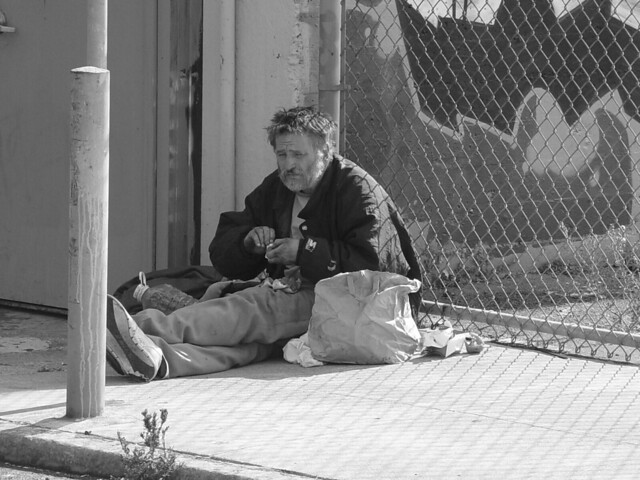
Now I am not generally one to give money to a pan-handler. If I do give something, it’s generally a snack (usually healthy) if I have one on me. This has been met with different responses: scorn, indifference or thankfulness.  I have offered a few times to go and buy something to eat or drink but have never been take up on the offer, until today.  I regret though, that I may have contributed to, not helped the problem of food insecurity.  


Today, I had walked to an appointment along Dalhousie Street in Ottawa (for those of you who know where that is) and was on my way back to work, when I stopped to grab something from my purse and rearrange my things. I was soon confronted by a shabbily dressed young man. Since I was stopped, kneeling over my bag, I was his captive audience. He proceeded to tell me all of his problems, from being kicked out of the shelter down the street because of a fist fight, to not having enough to eat. He also assured me that spending money on drugs was not an issue because he doesn’t use them. I was waiting for him to ask me if I could give him money, but that didn’t seem to surface from the avalanche of words spewing from his mouth. I interjected, “can I buy you something to eat?” He replied with “oh yes, yes, please, I’m so hungry.”

At this point I should maybe provide a little background on food insecurity. The prevailing definition of food security is “a situation that exists when all people, at all times, have physical, social, and economic access to sufficient, safe and nutritious food that meets their dietary needs and food preferences for an active and healthy life.”  Food security and insecurity are on opposite ends of a continuum. Food insecurity has different stages of severity starting with not being able to buy and eat what one would like. This gets at issues of quality including variety, safety, nutrient content, and the caveat that foods must last and not go to waste. The next stage involves a decrease in quantity which might or might not be accompanied by hunger. Finally, the most severe stage is the complete absence of food intake (going completely without).

Food security is a basic human right, but from the 2007-2008 Canadian Community Health Survey, 7.7% (961,000) of Canadian households were food insecure. And keep in mind this is for people with a fixed address, unlike homeless people and those in shelters, so the number is likely higher.  I imagine this figure will only climb as our (Canadian) income gap rises and worldwide economic problems deepen; unless of course, our social policies change, but that’s a discussion for another day.   
   
Remember that a key part of food security covers quality – we should have access to healthy, nutritious food.  Being food insecure is related to decreased quality of foods consumed and nutrient inadequacies, which makes intuitive sense. 

I regret that although I was providing food in principle, it was not of the nutritious variety.  We went to the nearest restaurant, Garlic Corner, and I said to the guy “get what you like, I’ll pay for it.” He hummed and hawed, something about wanting breakfast down the street because “these guys don’t serve it past noon, and they are really, really slow.”  Then it was he didn’t eat meat but didn’t want any of the vegetarian options. Either the choices at Garlic Corner were not healthy enough (which is partially true) or he wanted money instead, of which I am guessing the latter. Anyway, I told him that I had no cash, so he settled on a Nanaimo cake thing and a red bull. All crap. I mulled all of this over on the remaining walk back to the office. What have I done here? Propagated the problem? Should have I stipulated what he order, ordered it for him, went to a better restaurant, what?

What do you think? I tried to help out a fellow human in need, but did I really? Even if I had stipulated what he had ordered, it would have been denigrating.  The other alternative would have been to ignore him, pack-up my things and continue on as if I had not seen or heard him. While I have ignored street people in the past, I am growing increasingly uncomfortable with it, trying now to at least acknowledge them as people when I walk by – a smile, node, or hello. I don’t mind providing snacks here and there but I’d almost rather do nothing if it means that the another red bull or Nanaimo cake gets sold and consumed. At the same time, it's food, pretty good tasting food at that. I would imagine that it's pretty hard to be concerned about nutrition when there are so many other problems to deal with.  That is the problem.


ResearchBlogging.org

Pilgrim A, Barker M, Jackson A, Ntani G, Crozier S, Inskip H, Godfrey K, Cooper C, Robinson S, & SWS Study Group (2011). Does living in a food insecure household impact on the diets and body composition of young children? Findings from the Southampton Women's Survey Journal of Epidemiology and Community Health, June 7 : 10.1136/jech.2010.125476


Kirkpatrick SI, & Tarasuk V (2008). Food insecurity is associated with nutrient inadequacies among Canadian adults and adolescents. The Journal of nutrition, 138 (3), 604-12 PMID: 18287374