Saturday, February 26, 2011

Street layout and connectivity - how is that related to sustainability and obesity prevention?

This week’s post discusses connectivity - how easy is it for you to get from point A to be B on foot or by bicycle in your community? This follows nicely from last week’s post on compactness and diversity and will sum up the series on sustainability and obesity prevention.  Now equipped with this bit of background info, we will be better able to determine which community design options, like the Fused Grid, are better for sustainability, and possibly for our waistlines and overall health.  

As I highlighted before, suburban loop and lollipop neighbourhoods are confusing and time-consuming to navigate. They often preclude walking anywhere because of their design; there is never a short, straight line route to where you want to go. In these types of designs there are very few intersections, which are said to increase <driver> safety. However, as the number of intersections increases, the shorter the distance there is to walk from point A to B (motivating people to actively commute), and the more routes you have to choose from, making the walk/ride more interesting (also motivating). 

Walking distances for the loop/lollipop design versus traditional grid

To increase the connectivity of subdivisions, some features discussed in the post on safety could be added, such as way-finding signage for ‘cat-walks,’ as well as adding pedestrian and bike trails through green space, which link different areas within the neighbourhood or the wider community.

Adding biking infrastructure can increase the connectivity over larger areas. I find this especially important for me as I strive to actively commute to work from Aylmer to Ottawa. The National Capital Region is better than many places; we have separate pedestrian/biking pathways and some shared road bike lanes. The City of Ottawa is even planning to pilot a segregated bike lane on Laurier street. Overall, though I find though that the infrastructure is discontinuous and more geared to the leisure walker/biker, not the commuter. For example, you take a bike pathway and suddenly find yourself on the road going the wrong way on a one-way street. Or you have to decide between taking a separate, safer bike pathway that follows the meandering river, or take a direct, much faster, but less safe route that uses the roadway.    

The relationship between physical activity/obesity and measurements of street connectivity, such as intersection density and block size, has not been clearly demonstrated in the scientific literature (1-3). However when these measures are incorporated into an overall walkability index that generally includes land-use mix and residential density, more walkable neighbourhoods (with higher intersection density, more mixed land-use, and higher residential density) have been found to relate to decreased obesity among adults (2).

Few studies have been conducted on children, although one study in Alberta found that girls living in highly walkable neighbourhoods were less likely to be overweight than girls in less walkable neighbourhoods, with no difference found among boys (4). Another study in the U.S. did not find a significant relationship between obesity and street connectivity, but did find that children living in neighbourhoods built after 1969 (curvilinear, suburban design) were more likely to be obese than children living in neighbourhoods built before 1970 (traditional, grid iron design with small blocks and lots of intersections)(5).

There is some evidence, as has been discussed in previous posts, that changing the design of the built environment (specifically with regard to increasing safety and mixed land-use) can increase physical activity (this is akin to an experiment)(6). Interestingly, there is also some evidence that improving cycling networks in cities and towns modestly increases cycling (7). However, it is difficult to determine if this results in more new riders or more trips taken by existing riders; the former being much better from a public health perspective. Unfortunately, there are very few studies that examine how changes in neighbourhood/street layout can lead to later changes in physical activity or obesity. Perhaps because randomizing people and telling them where to live is a difficult thing to do. Nonetheless, some researchers are getting around this problem with novel study designs - hopefully with results coming soon.   

On-street marking and separating bike lanes in Manhattan, picture from Active Design Guidelines, NYC
     
As I discussed in a previous post, the Centers for Disease Control and Prevention in the U.S. conducted a comprehensive review with the goal of developing recommendations for childhood obesity prevention at the community-level (8).  Related to increasing street connectivity, the report recommended that communities should:

  1. Enhance infrastructure supporting bicycling and walking;
  2. Enhance personal safety in areas where persons are or could be physically active;
  3. Enhance traffic safety in areas where persons are or could be physically active.
Increasing connectivity at the street, neighbourhood, and town/city level may get people out walking or biking for transport or pleasure, especially if the area is compact and diverse. Overall, though, I would argue, that if our spaces are aesthetically pleasing, safe, compact, diverse AND connected, we would be most likely to be active for transport or pleasure, which  increases the sustainability of the area and can help to keep excess weight in check. A great new resource that I stumbled upon from NYC highlights exactly what I have been talking about over these last 4 posts + the introductory post on sustainability. It also goes a whole lot further, showing how to design buildings to increase physical activity, where to build, and increasing access to public transit and healthy food options, to name a few. It's free to download.


References


  1. Saelens BE & Handy SL. Built environment correlates of walking: A review. Medicine & Science in Sport Exercise. 2008; 40(7S): S550-66 http://www.ncbi.nlm.nih.gov/pmc/articles/PMC2921187/
  2. Feng J et al. The built environment and obesity: A systematic review of the epidemiologic evidence. Health&Place. 2010; 16: 175-90 
  3. Carter MA & Dubois L. Neighbourhoods and child adiposity: A critical appraisal of the literature. Health&Place. 2010; 16: 616-28 
  4. Spence, J. C. et al. Influence of neighbourhood design and access to facilities on overweight among preschool children. International Journal of Pediatric Obesity. 2008; 3: 109-116.
  5. Grafova, I. B. Overweight children: assessing the contribution of the built environment. Prev Med. 2008; 47: 304-308.
  6. Heath GW et al. The effectiveness of urban design and land use and transport policies and practices to increase physical activity: A systematic review. Journal of Physical Activity and Health. 2006; 3 Suppl 1; S55-76 http://www.aapca3.org/resources/archival/060306/jpah.pdf
  7. Yang L et al. Interventions to promote cycling: systematic review. BMJ. 2010; 341:c5293 http://www.bmj.com/content/341/bmj.c5293.full
  8. Khan LK et al. Recommended Community Strategies and Measurements to Prevent Obesity in the United States. Morbidity and Mortality Weekly Report. 2009; 58(RR-7) http://www.cdc.gov/mmwr/preview/mmwrhtml/rr5807a1.htm


Friday, February 18, 2011

Compact and diverse communities: sustainable and obesity preventive?

This is the third post in the series – ‘Sustainable community design and obesity prevention;’ only one more to go. Today I will obviously be discussing how compact and diverse areas can influence our waistlines. 

It makes sense that for neighbourhoods to be liveable (enjoyable, sustainable, useable, etc.) there must be interesting and necessary amenities accessible within easy walking distance.  Although there are differing views as to the meaning of ‘easy walking distance,’ I am referring here to destinations that are accessible in about 10 minutes or so – about 1 km, or the distance of a traditional city block.

These amenities should include banks, schools, restaurants/pubs, cafes, shopping, grocery and corner stores, parks and open spaces, and meeting places such as courtyards and piazzas.  The term ‘mixed land-use’ refers to the mixing of residential, commercial, and institutional uses. This makes neighbourhoods and the broader community more compact, as well as diverse. 

In an ideal world, I would live in an area where I could access all amenities, as well as my job, on foot.  Right now, according to www.walkscore.com, I live in a ‘car-dependent’ neighbourhood – scoring an abysmal 27/100. Curiously downtown Hull, QC (close to my home) seems to do pretty well, although I’m not convinced the site takes into account whether anyone actually lives there (e.g. downtown Hull is mostly government buildings).  In the better weather, I have to ‘force’ myself to bike the 12 km into work and back home.  Although I am no marathon runner, I consider myself to be in fairly decent shape, so assuming the average person would commute 24 km round trip by bike each day is not feasible (and I don’t even actively commute each and every day); obviously the walk is impossible and public transportation is a bit annoying.


Among adults, the general finding in the scientific literature is that mixed land-use, high density, and low sprawl (different measures that take into account density, degree of mixed land-use, block size, etc) are associated with increased walking (1), and a decreased probability of obesity (2) and high blood pressure among area residents (3). Mixed-use zoning alone can dramatically increase physical activity; a review of 12 studies showed that the median improvement in the level of physical activity was 161% (4).  In children, the association between compactness and weight is less clear and reflects, at least partly, a lack of similar studies with which to compare results (5).

The Centers for Disease Control and Prevention in the U.S. conducted a comprehensive review with the goal of developing recommendations for childhood obesity prevention at the community-level (6).  Included in the recommendations were:

  • Support for locating schools within easy walking distance of residential areas 
  • Zoning for mixed-use development

Compact, diverse neighbourhoods and communities are more liveable and likely more healthy, but can we afford to live in these places?  More people living in one area make amenities viable but that also increases land value.  How do we build or retrofit these communities, simultaneously making them profitable for developers/cities and equitable for all residents?  


References
  1. Saelens BE & Handy SL. Built environment correlates of walking: A review. Medicine & Science in Sport Exercise. 2008; 40(7S): S550-66 http://www.ncbi.nlm.nih.gov/pmc/articles/PMC2921187/ 
  2. Feng J et al. The built environment and obesity: A systematic review of the epidemiologic evidence. Health&Place. 2010; 16: 175-90 
  3. Leal C & Chaix B. The influence of geographic life environments on cardiometabolic risk factors: A systematic review, a methodological assessment and a research agenda. Obesity Reviews. 2010; March 1. 
  4. Heath GW et al. The effectiveness of urban design and land use and transport policies and practices to increase physical activity: A systematic review. Journal of Physical Activity and Health. 2006; 3 Suppl 1; S55-76  http://www.aapca3.org/resources/archival/060306/jpah.pdf 
  5. Carter MA & Dubois L. Neighbourhoods and child adiposity: A critical appraisal of the literature. Health&Place. 2010; 16: 616-28 
  6. Khan LK et al. Recommended Community Strategies and Measurements to Prevent Obesity in the United States. Morbidity and Mortality Weekly Report. 2009; 58(RR-7)  http://www.cdc.gov/mmwr/preview/mmwrhtml/rr5807a1.htm
Thursday, February 10, 2011

Sustainable community design and obesity prevention: Implications for increasing safety

Today’s post, discusses the implications of neighbourhood safety, which was briefly touched on in the previous post on aesthetics. I should highlight here that when I refer to safety, I am including both objective (measured, say with crime or traffic accident statistics) and subjective forms (as perceived by residents themselves). 

In order for communities (neighbourhoods or whatever synonym you would like to use) to be sustainable, they should not be environments in which residents are unable to experience all that the community has to offer, either because they live in fear of getting injured or killed, or are actually more likely to get injured or killed when out and about.

Some studies in the scientific literature have found that unsafe neighbourhoods discourage adult residents from walking – specifically lack of sidewalks (1).  This is a huge problem in my neighbourhood where only main arterial roads have sidewalks on each side. Among children, a Canadian study (Nova Scotia) linked increased parental perceived neighbourhood safety to increased participation in unorganized sports (2). Another study in Australia that followed the same children over time (a ‘longitudinal’ or ‘cohort’ study), found that parental concerns with traffic deterred moderate-to-vigorous physical activity among boys, but not girls (3). However, girls' own concerns with road safety was cross-sectionally related to decreased physical activity levels (4).


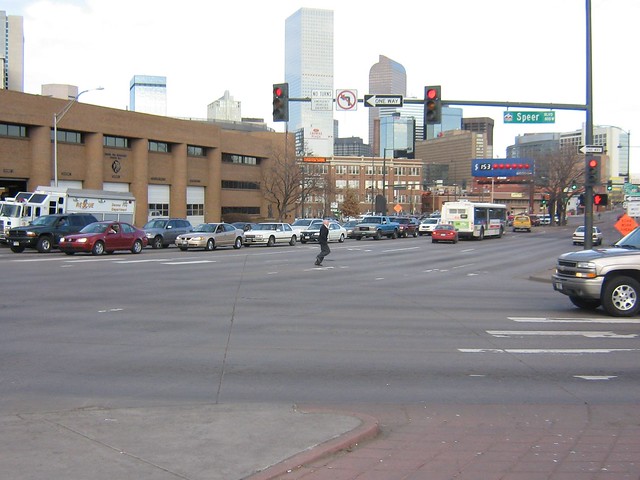
A pedestrian dashes across a huge intersection in Denver (Photo credit: 'Complete Streets')


In terms of obesity, few studies focusing specifically on neighbourhood safety have been conducted. One longitudinal study on children uncovered an influence of parental perceived neighbourhood safety on BMI that appeared to be mediated by increased TV watching. In other words, the results indicate that parents may restrict their children's outdoor physical activity if they perceive the neighbourhood to be unsafe, which translates into increased sedentary behaviours (TV watching in this case) and then increased BMI (5). 
   
Based on a review by Heath et al, changing urban design and land-use policies may be effective at increasing the physical activity levels of neighbourhood residents (6). The six intervention studies that they reviewed generally centred on redesigning the environment at the street-scale to make walking and biking more enjoyable and safe (examples include improved street lighting, traffic calming, and enhancement of street aesthetics). The median increase in physical activity across the studies was 35% (inter-quartile range of 16% - 62%).  

The list below highlights ways communities can potentially increase real or perceived safety. It is a compilation from various sources in the research, public health, and urban planning sectors (1,6-8)  . Hopefully more rigorous studies of their effects on residents, in terms of increasing physical activity and decreasing obesity, are soon to come:

    Traffic calming techniques (to slow down and/or discourage automobile traffic):
·         Widening sidewalks and narrowing width of streets 
·         Adding landscaping – i.e. trees lining the road, placed in between the sidewalk and the road (this can increase perception of safety by pedestrians). At the same time, landscaping should not obscure line of sight by both pedestrian and driver
·         Installation of speed humps
·         Altering road alignments
·         Adding traffic circles or pavement treatments
·         Removing vehicular rights of way (i.e. make dead end streets) but keeping pedestrian rights of way

    Ensuring adequate lighting along roadways and walkways (wherever pedestrians are likely to walk)

    Ensuring clear way-finding signage for pedestrians
·         Pedestrian crossing signs and marked crossing areas
·         Street names at the start/end of pedestrian walkways (i.e. ‘catwalks’ in subdivisions)

    Plowing of bike lanes and sidewalks in the winter time
·         This is especially problematic in Canada (see picture below and an interesting post on cycling in the winter by a fellow colleague - in French)

                         There is supposed to be a bike lane here - see the green sign? It's hardly ever
plowed in the winter (Stewart and Cumberland Streets, Ottawa Canada)

    Allowing adequate time for pedestrians to cross at traffic lights    

    Ensuring that at minimum, streets have sidewalks and a paved shoulder for cyclists. Although I'm sure cyclists would much prefer the establishment and maintenance of separate bike trails and more bike lanes on roadways 

    Creating ‘eyes upon the street’
·         Layout of residential areas
·         Building height and form

Certainly more research is needed on this topic, to relate changes in design, crime levels and overall perceptions of safety to changes in physical activity and obesity. Intuitively though, increasing the level of safety in areas where we live makes our spaces more enjoyable and useful, regardless if they have measurable impacts on our waistlines. 


References
  1. Saelens BE & Handy SL. Built environment correlates of walking: A review. Medicine & Science in Sport Exercise. 2008; 40(7S): S550-66 
  2. Veugelers P et al. Neighbourhood characteristics in relation to diet, physical activity, and overweight of Canadian children. International Journal of Pediatric Obesity. 2008; 3(3): 152-9 
  3. Crawford D et al. The longitudinal influence of home and neighbourhood environments on children's body mass index and physical activity over 5 years: The CLAN Study. International Journal of Pediatric Obesity. 2010; 34: 1177-87
  4. Carver A et al. Perceptions of neighbourhood safety and physical activity among youth: The CLAN Study. Journal of Physical Activity & Health. 2008; 5(3): 430-44
  5. Cecil-Karb R & Grogan-Kaylor A. Childhood body mass index in community context: Neighborhood safety, television viewing, and growth trajectories of BMI. Health & Social Work. 2009;34(3):169-77
  6. Heath GW et al. The effectiveness of urban design and land use and transport policies and practices to increase physical activity: A systematic review. Journal of Physical Activity and Health. 2006; 3 Suppl 1; S55-76
  7. Institut National de Santé Publique du Québec. Indicateurs géographiques de l'environnement bâti et de l'environnement des services influant sur l'activité physique, l'alimentation et le poids corporel. 2009. Available at: http://www.inspq.qc.ca/pdf/publications/1001_IndGeoEnvBati.pdf
  8. Dempsey N. Quality of the built environment in urban neighbourhoods. Planning, Practice & Research. 2008; 23 (2): 249-64


Monday, January 31, 2011

Orderly neighbourhoods with lots of green space good for the waistline?

Aesthetics of the residential environment is important for sustainability and even for obesity prevention as I alluded to in my introduction of sustainability on January 21st. I hesitantly categorized my discussion of ‘sustainability’ and how that relates to obesity into four separate posts, but you will find that the categories tend to blur together. Please keep that in mind as you read all posts in the series.

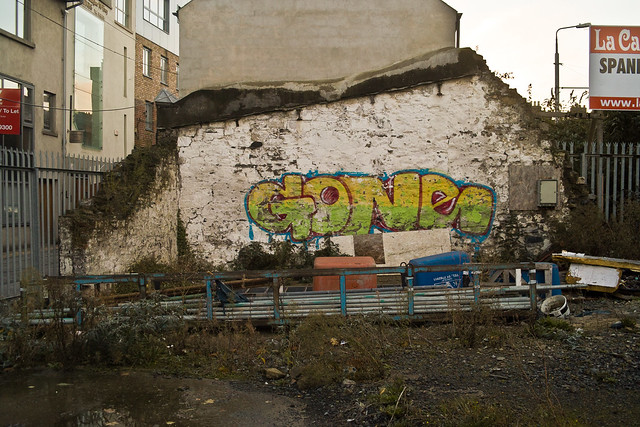
It’s probably a no-brainer that if your neighbourhood were to look like a dump, you would be less likely to be out and about being active. Well, the scientific literature is starting to catch up with common sense. Studies are finding that the presence of a lot of garbage, graffiti, derelict buildings, etc, in a neighbourhood tend to dissuade people from being physically active, and can actually increase their chances of being obese (1-3). There are a few explanations for why this might be; an obvious one is that if there is nothing interesting to look at, residents may not be enticed to go for a walk, or run, or use active transportation to get somewhere.  A run-down neighbourhood may also be perceived as dangerous, or may invite crime (perhaps you have heard of the ‘broken windows hypothesis’?) and actually be dangerous (4). This may prevent adult residents partaking in physical activity outside, and make moms leery of letting their children play outside.

Photo credit: W. Murphy

Stress can also result from living in a hazardous environment – stress has been shown to have direct effects on metabolism, and has been linked to obesity (2,5). Eating may also be used as a coping strategy for stress (6,7). Who hasn’t taken the Haagen Daas out after a stressful day at work? If you’re constantly stressed and have crappy, cheap food nearby that makes you happy, well then it’s not hard to overeat.

Dilapidated neighbourhoods likely do not have as many community residents looking out for their interests as say the Bridle Path in Toronto, the Glebe in Ottawa, or the Shaughnessy neighbourhood in West Vancouver.  These less cared for neighbourhoods, therefore, are prone to further environmental injustices such as illegal dumping.

I think, in addition to neighbourhoods that are not well cared for, we must also consider the mind-numbing monotony of suburban design. If I did not have a dog that did not require a walk two times a day, I would never walk around my neighbourhood just to ‘go for a walk.’  EVERYTHING LOOKS THE SAME!

Nearby greenery may also be important for the promotion of physical activity and prevention of obesity (I recently twittered about a new way to measure the quality of open space in neighbourhoods using Google Earth – Come, to think of it that may end up being my last PhD thesis paper…)  A study that used data from eight different European countries found that living in an area with a lot of greenery (objectively measured) increased the odds of adult residents participating in physical activity by quite a large amount (3.32-fold to be exact), compared to low greenery areas (8). High greenery areas also reduced the odds of obesity by 40%.  Associations among children are similar but less strong than they are in adults (9,10). 

Perceived greenery on the other hand, may be more important than objectively measured greenery; for instance, one study found an association between walking trips per month and the amount of greenery residents perceived, but not with that measured by the researchers (11). Population density may also be important as some studies have shown that greenery is not important in rural areas (12) or areas where other amenities are not that easily accessible on foot (11).

Photo credit: F. Grammenos
In addition to obesity prevention, greenery is beneficial for overall well-being. A study conducted in the UK found that people who were more dissatisfied with the green spaces in their neighbourhood were more likely to score lower on the mental health and vitality scales of the SF-36, than those who were not dissatisfied (13). Cognitive function has even been shown to improve among low-income children when they are provided with window views of greenery, in contrast to paved or bare dirt surfaces(14). Interestingly enough, a cross-Canada run is now underway to get Canadian children outside to play and learn - go Colin!  

In summary, if we like the way our neighbourhoods look we may be more likely to be physically active and less likely to be obese. Neighbourhoods that are cared for and regularly used are more sustainable, and more greenery can help to recycle the harmful outputs of urban/suburban living.   


References


  1. Grafova IB. Overweight children: Assessing the contribution of the built environment. Preventive Medicine. 2008; 47(3): 304-8 
  2. Stafford M, et al. Pathways to obesity: Identifying local, modifiable determinants of physical activity and diet. Social Science & Medicine. 2007; 62: 1882-97 
  3. Saelens BE & Handy SL. Built environment correlates of walking: A review. Medicine & Science in Sport Exercise. 2008; 40(7S): S550-66 
  4. Macintyre S. et al. Place effects on health: How can we conceptualise, operationalise, and measure them? Social Science & Medicine. 2002; 55(1): 125-39 
  5. McEwen BS. Protective and damaging effects of stress mediators. New England Journal of Medicine 1998;338(3):171-9. 
  6. Kumanyika SK. Environmental influences on childhood obesity: ethnic and cultural influences in context. Physiology & Behavior 2008;94(1):61-70. 
  7. Rosenkranz RR, Dzewaltowski DA. Model of the home food environment pertaining to childhood obesity. Nutrition Reviews 2008;66(3):123-40. 
  8. Ellaway A. et al. Graffiti, greenery, and obesity in adults: secondary analysis of European cross sectional survey. BMJ. 2005; 331:611-2 
  9. Bell JF et al. Neighborhood greenness and 2-year changes in body mass index of children and youth. American Journal of Preventive Medicine 2008;35(6):547-53 
  10. Wheeler BW et al. Greenspace and children’s physical activity: A GPS/GIS analysis of the PEACH project 
  11. Tilt JH et al. Using objective and subjective measures of neighbourhood greenness and accessible destinations for understanding walking trips and BMI in Seattle, Washington. American Journal of Health Promotion. 2007; 21(4): 371-79 
  12. Liu GC et al. Green neighborhoods, food retail and childhood overweight: differences by population density. American Journal of Health Promotion 2007;21(4 Suppl):317-25. 
  13. Guite HF, Clark C, Ackrill G. The impact of the physical and urban environment on mental well-being. Public Health 2006;120(12):1117-26. 
  14. Wells NM. At home with nature: effects of "greenness"on children's cognitive functioning. Environmental Behavior 2000;32(6):775-95. 

Friday, January 21, 2011

Sustainable Design, what does that even mean? Health by Design continues...

In urban ecology, human settlements are seen as dynamic ecosystems whose structures are defined by the built and natural environments, population demographics, social institutions, and culture, as well as belief, economic, and political systems (1). They are dissipative structures, meaning that they require huge inputs of energy, and produce amounts of waste in proportion to the materials they consume.  From reading the literature in this field, human settlements seem to be akin to parasites, in that they undermine the very ecosystems that support them. I would tend to agree with this perspective.

From this “city as ecosystem” perspective, the doctrine of sustainability has emerged, and revolves around the concept of ‘the three Es’ - Environment, Economy, and social Equity. Sustainable neighbourhood development then refers to the balanced consideration of environmental, social and economic goals, with specific objectives that include minimizing environmental impact, sustaining a high quality of life, and financing infrastructure in an equitable and efficient manner (2) – so that humans and their settlements can exist well into the future.
automobiles,cities,commuters,environmental issues,freeways,iStockphoto,public transportation,roads,rush hour,traffic
It should by now be quite apparent that our current space gobbling method for designing communities is environmentally (and in some instances, financially) unsustainable – see Health by Design: Part 1. However, if you need more convincing I can humour you with some extra facts and figures. In Canada for instance, passenger travel has increased by 30% (passenger km traveled per capita) from 1990 – 2008, and we travel mostly by personal passenger vehicle, not public transportation (85% of all ground-based transportation in 2008)(3). Increasing passenger vehicle use has led to an unprecedented rise in GHG emissions in Canada (and North America) – it now contributes 20% of all GHG emissions in Canada (3).     Suburban sprawl also requires the continual creation of paved roadways that often disrupt and damage human communities, as well as natural ecosystems, which have the capacity to recycle harmful outputs of suburban living (4). Increasing paved surfaces also increases water runoff, which increases the chance of raw sewage flowing directly into lakes and rivers when storm sewers are overwhelmed. As an aside, New York is now having to deal with aging infrastructure and is considering going green for the environment and its pocket book. Finally, a large bulk of infrastructure funding is diverted to road repair, financing that could be spent elsewhere to improve neighbourhood liveability. 

A sustainable neighbourhood design is, by its very nature, obesity preventive. The series Health by Design was originally supposed to be two posts, but I realized that I should probably more fully explain the characteristics of a sustainable neighbourhood design and how that relates to obesity prevention before I started discussing the effectiveness of the Fused Grid design. Since no one likes long posts, I’ll divide this into a series of four posts that focus on aesthetics, safety, diversity and compactness, and connectivity. This first post (coming soon) will begin with aesthetics.    

References
(1) Grimm N, Baker LJ, Hope D. An ecosystem approach to understanding cities: Familiar foundations and unchartered frontiers. In: Berkowitz AR, Nilon CH, Hollweg KS, editors. Understanding urban ecosystems: A new frontier for science and education.New York: Springer-Verlag; 1999. p. 95-105


(2) Jabareen YR. Sustainable urban forms: Their typologies, models, and concepts. Journal of Planning Education and Research 2006;26:38-52.
(3) Environment Canada. National Inventory Report: 1990-2008 Part I. Greenhouse gas sources and sinks in Canada: The Canadian Government's Submission to the UN Framework Convention on Climate Change. Available at: http://www.ec.gc.ca/publications/492D914C-2EAB-47AB-A045-C62B2CDACC29/NationalInventoryReport19902008GreenhouseGasSourcesAndSinksInCanada.pdf

(4)  Lopez R, Hynes HP. Obesity, physical activity, and the urban environment: public health research needs. Environmental Health: A Global Access Science Source 2006;5(1):25-32.


Tuesday, January 11, 2011

Governments play a role in deciding how we eat, citizens can play a role in government

Marion Nestle is a professor in nutrition, public health, and sociology at New York University.  She writes extensively on food policy issues and her research focuses on how science and society influence dietary advice and practice. She is the author of many books and currently writes a monthly Food Matters column for the San Francisco Chronicle, and blogs daily at www.foodpolitics.com and at the Atlantic Food ChannelHer most recent Food Politics post struck a chord with me and I wanted to share it:


'When San Francisco voted to eliminate toys from McDonald’s Happy Meals, the Forum at the Harvard School of Public Health invited comments on this issue.  Here’s what I had to say about it:
I’m surprised at the mayor’s comment that “parents, not politicians, should decide what their children eat,” because the San Francisco ordinance is not about the food. It’s about the toys.
Nobody is stopping parents from ordering Happy Meals for their kids. But as everyone knows, kids only want Happy Meals because of the toys.
The idea that government has no role in food choice is ludicrous. The government is intimately involved in food choices through policies that make the cost of some foods—those containing subsidized corn or soybeans, for example—cheaper than others.
It is not an accident that five dollars at McDonald’s will buy you five hamburgers or only one salad. It is not an accident that the indexed price of fruits and vegetables has increased by 40% since the early 1980s, whereas the indexed price of sodas has decreased by 30%. Right now, agricultural policies support our present industrialized food system and strongly discourage innovation and consumption of relatively unprocessed foods.
Agricultural policies are the results of political decisions that can be changed by political will. If we want agricultural policies aligned with health policies—and I certainly do—we need to exercise our democratic rights as citizens and push for changes that are healthier for people and the planet.
Yes, individuals are the ultimate arbiters of food choice. But our present food system makes unhealthful eating the default. We need to be working for government policies that make healthy eating the default. The San Francisco ordinance is a small step in that direction'.

I 100% agree with you Marion.  And I hope that others will soon come to understand and be concerned with this.


But how can we, as ordinary citizens, make a difference in the politics of our respective countries?  I think that it IS possible, but this is a rather lengthy discussion for another day or two or three...  


However, I would like to leave you with one last thought on this: 


vote-today
In order to even begin making a difference, we need to first know where political parties stand on issues of interest (i.e. food policies), and then actually go out and VOTE! In our last Canadian election (2008), only 59% of the eligible population voted. Voter turnout has been on the decline and this 2008 proportion is the lowest on record. Even more concerning is that voter turnout is lowest in the youngest age groups,the so-called future of this country...            

Thursday, December 23, 2010

Happy Holidays

Photo credit: www.dobbies.com

So, it's that time of year again. Since I am still a student, I will continue to take advantage of long academic holidays; meaning, that I probably won't have any new blogs to post until the new year (we'll see). And because I am new to the world of blogging, I have no old posts with which to cheat, unlike some of my colleagues. 


I will, however, take this opportunity to wish everyone a happy and safe holiday. And remember to check back here for new material in the new year.


Megan