Monday, May 2, 2011

Part 2 Building Design: Fooling people into taking the stairs

I just got back from a conference in Montreal – one on obesity at that. The hotel, the location for the conference, held sessions on floors 1-4 and on sub floors below the lobby – ample opportunity to use the stairs.  There were two main problems: 1) the stairs were confusing – you’d get up to one floor but then couldn’t find the next set of stairs to the next floor and have to walk quite a distance to get to them; and 2) there were escalators in between these floors in plain sight from the main floor lobby, somewhat easy to navigate, and were a brilliant, flashy gold colour. I, more often than not, took the flashy-fancy escalators. 

In my last post, I reflected on how easy it is to be physically inactive nowadays and went on to discuss point-of-decision prompts as a way to get people to use the stairs instead of escalators or elevators. These prompts appear promising, but what if buildings are not designed to make taking the stairs easier or enjoyable, such as was the case at the obesity conference? To answer this, in today’s post I will discuss the recommendations provided by New York City’s Active Design Guidelines to make buildings enjoyable places to walk – and some instances make walking the more convenient form of transportation. The guidelines were developed based on the best available evidence in the literature, as well as on current best practices in architecture and design. So keep in mind that even though these are recommendations there is no guarantee that they’ll work to increase physical activity.  At the same time however, they have direct synergies with sustainability, such as decreasing electricity and building material use (so, in my opinion, are at least worth considering).

There are three main categories of building design recommendations that I’ll touch on in my discussion below: 1) Elevators and escalators; 2) stairs; and 3) supportive design elements. I think that the more recommendations implemented, the more likely that building design will be successful at increasing the physical activity levels of its users.    

Design of elevators and escalators

Mechanized options for travel between floors should be designed to be hard to find, or at least less prominent (not the case for the escalators at my conference). Decreasing their speed can make them less efficient than walking, and save on electricity. Installing the minimum number of elevators required by building codes could also decrease efficiency by increasing volume of users. Other ways to make elevators less efficient than walking include programming them to:
  • Be skip-stop (they don’t stop on every floor so you have to get out and walk up a floor);
  • Open at each floor (this may not make sense in buildings with 30+ floors);
  • Open and close very slowly (which is beneficial for persons with disabilities) 
Design of stairs

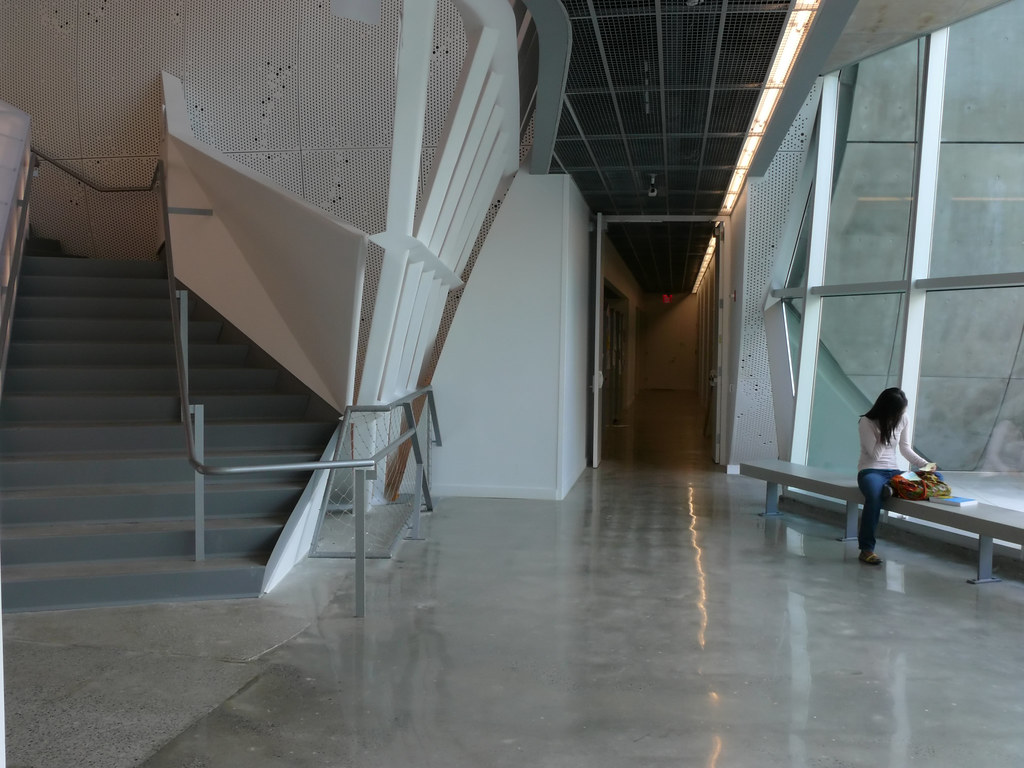
Stairs should be the main attraction. They should be visible from the lobby and elevators, and always located close to building occupants (i.e. office areas). One way to draw attention to them is to put the lobby of the building on the second floor, accessible from the ground floor via a grand staircase, with elevators accessible only at the lobby (meaning people have to use the stairs to access the elevators). Point-of-decision prompts can also help (as I discussed in Part I).  A great example of making stairs interesting -maybe a bit extreme and perhaps not sustainable, but cool nonetheless- is the piano stairs:  


Additionally, stairs should:
  • Open to and be accessible at each floor (no locked doors);
  • Be seen – if stairwells are a must they should be transparent;
  • Receive large amounts of natural light;
  • Be well ventilated


Canadian Museum of Nature, Ottawa (ON): CC images Michelle Hotchin


In order to improve the overall experience, stairs themselves should be designed for comfort, aesthetics, safety, and ease of maintenance. Art and articulated and unique stair composition can increase interest. Balustrades, handrails and landings can provide architectural points of interest, especially for grand staircases. Floor finishes should be slip resistant and colour or textural contrasts can be used to increase safety. Step height should be comfortable for small children (i.e. not too high), and staircases should be wide enough for groups traveling in opposite directions to safely pass. Finally, stairs should be easy to maintain. Long lasting materials should be chosen that are easy to clean and discourage vandalism or graffiti.   
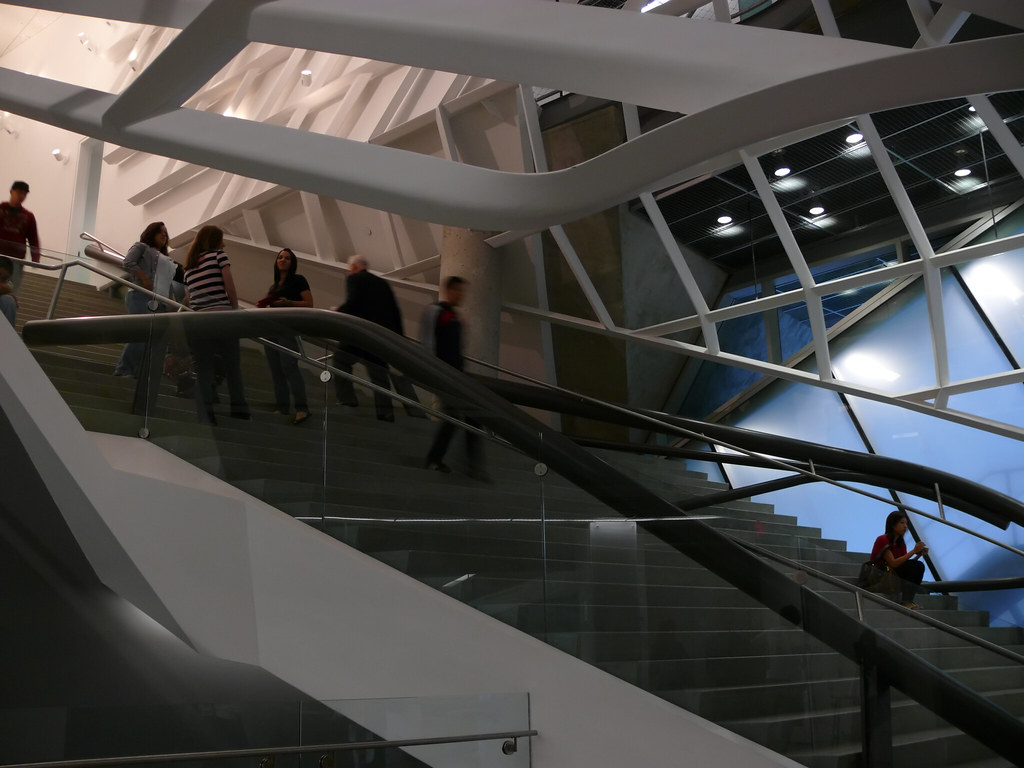

   
Cooper Union New Academic Building, New York, NY: CC images

Supportive design elements

There are some things that can be included in building design that make being physically active easier and more enjoyable. Change rooms and showering facilities are big ones for me. My work building currently does not have one. I figured it would be quite easy to add a shower – one for men and one for women and no need for change rooms as our washrooms are so large. No dice though, my request was immediately shut down by my organization – citing no money. Always the excuse. I plan to press the issue. Bike parking and storage are also important. In NYC, several laws have been enacted that mandate certain buildings and facilities provide bicycle parking or other accommodation for cyclists. Storage can also prevent damage to building interiors when bikes are brought inside, and also prevent nasty notes from being sent to you when you forget your bike lock. 

Design of building exteriors should also have the pedestrian/cyclist in mind and interestingly can influence building users and non-users alike. Here are a few examples that can enliven, and improve the comfort/convenience and safety of the streetscape:
  • Reducing set-backs (space between the road and building) and providing multiple entry points 
  • Adding awnings or canopies (to provide shelter from the weather)  
  • Porches, stoops, and terraces can add to the social environment and provide ‘eyes on the street’ 
  • Paying attention to nearby parks, open spaces and public gathering areas so that the building does not adversely affect them (e.g. minimizing the cast of building’s shadow, and the potential for creating unpleasant wind conditions)


Building in New Orleans (LA): CC image


The design of public buildings (including point-of-choice prompts) has the potential to not only increase physical activity, but also to vastly improve the quality of our shared spaces. Perhaps residential spaces could also be designed to promote physical activity and reduce sedentary behaviour. The hard part is that people generally choose what they live in and where they live.  It is my hope that more and more researchers examine how design of our spaces (from houses to cities) may influence not only obesity but overall health, with high quality epidemiological methods - something that is currently lacking.              


ResearchBlogging.org

Bloomberg MR, Burney D, Farley T, Sadik-Khan J, & Burden A (2010). Active Design Guidelines: Promoting Physical Activity and Health in Design City of New York

Monday, April 25, 2011

Part 1: Building design to increase physical activity

We all know that we are not getting enough physical activity these days. In fact, 52% of Canadian adults 20 years of age or older are considered inactive, and 88% of children aged 5-19 years don’t meet Canada’s physical activity guidelines. It’s one out of many reasons why the prevalence of overweight and obesity is so high. But physical activity has other health benefits, in addition to staving off obesity and cardiovascular disease, such as reducing stress and improving concentration, promoting correct physical growth in children, and maintaining mobility and independence in the elderly. 

The problem is that it’s just too easy to be physically inactive.  Our society has, for all intents and purposes, engineered physical activity out of the built environment – important, especially when you consider that schools and many jobs require us to be sitting for most of the day to begin with.  Take for instance stair climbing; it is a great means of increasing cardiovascular output, but the need for it has all been eliminated by the design of modern buildings.  Escalators and elevators are easy to access and do the work for us, but are energy guzzlers - elevators account for 3-10% of a building's energy uses. Stairs, our healthy and environmentally friendly benefactor, are difficult to find, often ugly and dark, and sometimes invite anti-social activity. It’s no wonder people don’t use them.

Can we design public buildings then to increase physical activity? This is a burgeoning area of research with evaluation studies still lacking. In the next post, I’ll discuss some recommendations made by the City of New York in their Active Design Guidelines, based on the best available evidence and best practices.  However, I’d like to discuss here point-of-decision prompts as a way to get people to use the stairs instead of escalators and/or elevators – a bit different than design per se but related and still very relevant and interesting.  I was actually pleasantly surprised to see that there was a large enough body of research to warrant a systematic review on the subject.

Motivational sign from Kino Québec (not sure why the guy is blue).  More info is available at: http://www.kino-quebec.qc.ca/marche/promotions.asp 

This very recent systematic review was published in the Scandinavian Journal of Public Health in 2010 and included 25 studies that examined the role of posters (n = 16), stair-rise banners (n = 5), both (n =4), or posters and floor graphics (n = 1) in helping people decide to take the stairs versus elevators (n = 8) or escalators( n = 18).  The majority of studies were conducted in public transit stations (e.g. train, bus, airport), shopping malls, or office buildings.  All used the interrupted time-series design (before-after where the ‘before’ sample does not necessarily contain the same individuals as the ‘after’ sample).               

Of the 42 comparisons (more than one comparison often conducted in a study), 31 reported modest but significant increases in stair climbing, 10 reported no association, and 1 reported an inverse association. The non-significant results were more likely to be reported by studies examining stairs versus elevators. There were no consistent differences between men and women. Of the significant studies that calculated odds ratios, those in favour of the intervention ranged from 1.05 – 2.93. Results appear promising with perhaps more work to be done to get people to use stairs instead of elevators versus escalators.  

Motivational sign from NYC Active Design Guidelines

There are some important things to keep in mind about this review and the included studies:
  • Follow-up times were fairly short (at most 6 months). Some studies found that stair climbing decreased back to baseline over time (I guess as the novelty wore off)  
  • I’m not certain as to how denominators were calculated at the ‘point-of-decision’. This was not discussed in the review but likely easy to find out by accessing individual articles  
  • Only studies that looked at stair ascent were included. I think descent is equally important  
  • It’s not readily apparent which messages and/or mediums work best 
  • The same authors conducting different studies make up a large proportion of the included studies. This appears to happen in 4 instances and amounts to 16/25 studies.  This increases the likelihood of a bias occurring in one study being replicated in another, and both (or in some cases 6) being included in the review 
  • Finally, as I alluded to earlier, the study designs are methodologically weak. The authors of the review recommend a control-site but comment on the difficulties of making this happen in practice.  In my opinion, stronger designs are more difficult in public transit buildings and malls – but feasible in office buildings (e.g. randomizing buildings and following the same people within each building). 
Point-of-decision prompts look like promising ways to get people to take the stairs (another review came to similar conclusions) but I think that more high quality research is warranted.  Additionally, what if point-of-decision prompts were accompanied by changes in actual building design? You’ll have to read my next post to find out. Stay tuned.


ResearchBlogging.org

Nocon M, Muller-Riemenschneider F, Nitzschke K, & Willich SN (2010). Increasing physical activity with point-of-choice prompts -- a systematic review Scandinavian Journal of Public Health, 38, 633-38

Wednesday, April 13, 2011

Battle of the bike lanes - in NYC and now Ottawa-Gatineau?

Hat tip to Atif who brought this story to my attention this past November.  Over the last three years the Bloomberg administration has created over 200 miles of bike lanes and passed several bicycle friendly laws. This has been to the detriment of infrastructure supporting car use. To me, this is great news but to others that have a special attachment to their cars, or fear delivery trucks won’t be able to make their morning deliveries, this is terrible news. A similar story is starting to unfold in Ottawa; a ‘not-in-my-backyard’ mentality.

There is a war raging now in New York City – over bike lanes

In NYC, vocal opposition by drivers and elected officials has led to the removal of newly established bike lanes in Brooklyn and on Staten Island – lanes that communities originally wanted after extensive public consultation.  It seems that in the US, if you don’t agree with the government and don’t get your way, then you sue (if you have the means that is). That’s precisely what’s happening in New York City. A bike lane along Prospect Park West, a road forming the boundary between the Prospect Park and the well-to-do neighbourhood of Park Slope, is at the centre of a lawsuit brought on by wealthy, well-connected Brooklyn residents. According to the Times, almost three quarters of Park Slope residents are in favour of the bike lane; however this drops to 50% of residents who live along Prospect Park West, prime real-estate that overlooks the park.

A nice butt shot of me on one of NYC's off-road bike lanes

Opponents have cited many faults by the DOT - erroneous, misleading statistics, lack of transparency and public consultation, sub-par design, reduced room for cars, reduced safety, to name a few.  As reported by the Times, room for the legal complaint to be made stems from a state statute that allows challenges to government actions considered to be arbitrary or unfair. Nowhere do I see these two requirements being met by bike lane opponents. It just seems like a complaint against changing the status quo and making life slightly less convenient.

From an overall perspective, DOT statistics show that bicyclist fatalities and crashes in NYC have decreased almost 19% from 2006 to 2010, with the number of cyclists doubling from 2006-2010, and increasing 13% from 2009-2010. However, I did not come across stats on percentage of mode share (although this is likely premature as I discuss below). For Prospect Park specifically, DOT reports that crashes involving injuries are down 63%, speeding by cars is down from 75% to 20%, and cycling on the sidewalk is down 80%. Area residents and users of the lane also report feeling safer. Opponents, however, feel that the numbers have been deliberately 'fudged'. As reported by TransportationNation, the lawyer of the group filing the lawsuit stated:

“Everyone should be concerned about DOT’s misuse of the data. Everyone. This case is about a government agency wrongfully putting its thumb on the scale by fudging the data and colluding with lobbyists. That is not what ‘public integrity’ means. Some people on both sides of the issue are affluent and have political connections. So, the continuous, one-sided name-calling is hardly appropriate. But, more importantly, it keeps people from focusing on the real issue in the case, which I suspect is the true aim.”

Clearly an independent third party needs to evaluate use and safety of biking infrastructure if these statistics are to be believed. At the same time, new biking infrastructure will take some getting used to (by users and non-users alike) and time to increase awareness in the general NYC community (to increase the number of users), so an in-depth evaluation right away, in my mind, is premature. Additionally, it’s pretty hard to argue with people who think that a bike lane is a terrorist plot. I am truly amazed and saddened by this on-going saga. I mean they are bike lanes after all – meant to reduce congestion and greenhouse gas emissions, and increase safety for all…  

Some debris left in a NYC bike lane; Creative Commons Image  

Foreshadowing for Ottawa-Gatineau?

Certainly, the biking infrastructure in the Ottawa-Gatineau area is not quite as extensive and the proposed plan to create a segregated bike lane on Laurier Street has not generated nearly the level of disaccord; however, it’s there. Interestingly more lanes are planned; the National Capital Commission has quietly announced plans to implement a segregated bike lane on Wellington Street.

The idea of implementing biking infrastructure is to make cycling more enjoyable, safe, and convenient, and driving less convenient – ultimately, to change the commuting mode share.  

Complaints in NYC and in Ottawa have some commonalities

Why do all this for only a select few people? Only the hardiest of hardy cycle all the time and that’s not a lot, especially given our winters. Cycling will never catch on:

Well the point is to encourage MORE people to take their bikes instead of their cars. This will take time for people to switch and for infrastructure to keep up with demand. Biking in winter (as well as in the other three seasons) is possible if it becomes the norm – with dedicated bike lanes that are well-connected and maintained throughout all seasons (a colleague of mine has discussed Finland’s meticulously ploughed bike lanes in winter). 

Bike lanes take away parking spots for paying customers:

This is debatable. Cyclists take up much less space than cars and have easier access to stores and shops (along with public transit users). Thus, bike lanes with bike parking have the capacity to bring in more paying customers; previous estimates in Germany and the UK show that pedestrianised areas can increase the number of shoppers by 20-40%.  And an Australian study determined that each square metre of space allocated to cars contributed just $6/h in shopping expenditures, while each square metre of space allocated to bicycles brought in five times as much ($31/h).

A recent Globe & Mail article also highlighted the problem of traffic congestion and excessive commute times potentially affecting the economic performance of urban centres in Canada. The Toronto Board of Trade’s international city rankings on Prosperity, which measures cities on a number of economic, social and structural indicators, put only two Canadian cities in the top 10 overall (Calgary and Toronto); none cracked the top 12 for transportation. Clearly driving, which has the highest mode share in Canada, is not all that efficient.     

If you want more economic convincing, a writer at the Economist makes a good case for bike lanes (in NYC) ‘from an economic perspective;’ which is definitely worth a read.

Some final thoughts

I think that many people are aware that the design of our residential spaces (at least in North America) is not sustainable. By comparison, we are much more slowly piecing together how our commuting/convenience lifestyle may be at least partially to blame for our growing waistlines and associated chronic diseases. Many people say they would like to do something to change but when it comes down to it, they can’t sacrifice the convenience.  I think we all must be willing to try new things and accept some level of inconvenience if we are to put a halt to both environmental degradation and obesity.  At the same time, we need to measure the impacts of these changes to determine how we can do better, and that public money is spent wisely.  Cyclists need to do their part as well: respect pedestrians, the rules of the road, and not assume that pedestrians or motorists will behave in the right/legal/expected way. Finally, bike lanes are not a be all and end all of sustainable transit – the trick will be balancing the needs of all types of active (e.g. biking, walking, & rollerblading) and public (e.g. rail, tram, bus, etc.) transit modes while making driving less desirable.      

ResearchBlogging.org
WHITEHEAD, T., SIMMONDS, D., & PRESTON, J. (2006). The effect of urban quality improvements on economic activity Journal of Environmental Management, 80 (1), 1-12 DOI: 10.1016/j.jenvman.2005.01.029

Lee, A., & March, A. (2010). Recognising the economic role of bikes: sharing parking in Lygon Street, Carlton Australian Planner, 47 (2), 85-93 DOI: 10.1080/07293681003767785

Monday, April 4, 2011

Is green good for our health?


Is being in a ‘green’ environment good for our health and well-being? Are we starved of this connection with nature? Richard Louv thinks so, author and chairman of the Children and Nature Network.  He has coined the term ‘nature-deficit disorder’ to reflect the psychological, physical and cognitive repercussions of our lack of contact with nature, especially among children in their vulnerable developing years.  Although Mr Louv specifies that this is not a formal diagnosis, I am not in love with the term because I find that it does bring forth this meaning to me. I admit that I haven’t yet read “Last Child in the Woods” (am planning to once the single copy on loan at UO has been brought back finally), but I wanted to investigate the scientific evidence for this idea a little further.  And then discuss, in the grand scheme of things, whether the evidence really matters anyway.

The Child and Nature Network has been busily compiling together the evidence base for nature and health.  While it is important for an advocacy group to do this, I find it somewhat biased from my perspective as an epidemiologist – where are the studies that examined these types of relationships but didn’t find anything? So like any good epidemiologist would do, I set out to look for some systematic reviews and meta-analyses.    
 
Without much looking I came across a recent systematic review that sought to examine studies that compared health outcomes in natural and synthetic environments, usually over a short duration. Twenty-five studies were included, with most being cross-over or controlled trials; although seven were randomized controlled trials. The most common outcomes were scores on various self-reported emotions. This is somewhat problematic in that respondents often can guess what is being studied (especially if it’s a non-randomized cross-over study) and will sometimes adjust their responses. More robust study designs (such as RCTs or at least randomizing order of exposure to each of the environments) can help to mitigate this bias. Other common outcomes included physiological measures such as cardiovascular functioning (blood pressure or pulse), and hormone levels (salivary or urinary cortisol, amylase, and adrenaline). Less common outcomes included immune function, physical activity, motor performance, cerebral brain activity, engagement, memory recall, and sleeping hours. There were too few of these to conduct a meta-analysis so I won’t discuss them further – you can get more info here.


The meta-analysis revealed (see Table 1 above) a possible benefit of natural versus synthetic environments for energy, anxiety, anger, fatigue and sadness. No benefit was seen for more objective measures like blood pressure and cortisol levels. There was a benefit reported for attention before effect sizes were adjusted for baseline levels. Because only 3 out of the 5 attention studies had baseline measures, this may have reduced statistical power, as the effect size decreased only slightly but the confidence interval increased.

Important points to keep in mind:  

·         Most of the included studies were experimental in design and included college students, adult males, or physically active adults – so the overall finding of the meta-analysis is not generalizable to the overall population, or to children 
·         Outcomes were examined over a very short duration. Some beneficial effects may take longer to manifest and/or require repeated or prolonged exposure to the natural environment
·         We’re not sure what exactly in the natural environment is responsible for these beneficial effects. Does this matter?
·         I am a little concerned with regard to the small number of studies, as well as study quality (this was not formally assessed). We may find a different association with a larger number of high quality studies

What does this all mean then? Over the short-term natural environments may reduce negative emotions and improve energy levels but they don’t appear to improve some cardiovascular and endocrine measures of health. Of course, I have to add the requisite last line: ‘more studies of high quality are needed,’ to make any definitive conclusions.         

Now from my own expertise and knowledge, I know that there have been more and more studies conducted to determine how the residential environment influences physical activity and/or obesity. This is a difficult area of research – perhaps why results have been mixed and effect sizes often small in comparison to the effects of individual and family characteristics. As I discussed in a previous post, some of these studies have found a positive association between the availability/amount of green space and the physical activity and obesity levels of area residents (in both adults and children). For the most part however, these have been cross-sectional associations, and overall, findings are not consistent from study to study. Putting this aside, we’re not even sure if it’s the greenery itself or simply the open space that invites people to be more physically active. Certainly greenery adds to the aesthetics and quality of the built environment, and aesthetics, as a general theme, has been previously associated with physical activity and obesity (see my previous post). Who knows though, we’d have to ask people why.       

In summary, the evidence of nature and health isn’t hugely convincing but not dismissive either – it’s there in some form. What we don’t know is whether it’s simply being active and away from our gadgets that helps the most – perhaps it’s not necessarily the ‘nature’ itself. Whether it’s the chicken or the egg doesn’t really matter to me and probably will never be totally discernible. As a society we are much more sedentary then in days gone by, and so it follows, less connected to nature. Green spaces can recycle the harmful outputs of urban living and add to the quality of our living spaces. To me, these two concepts go hand in hand. Paraphrasing a remark made by the artist Robert Bateman that was reiterated by Mr. Louv: if we don’t know about nature, we will be less likely to care for it and do something to preserve it. This is especially important among our children who will be the ones left to take care of the planet. Getting outside gets us physically active and connected to nature. So even though the evidence may not be sound, there is no harm in advancing this issue – it can only improve the quality of our spaces and help to sustain the world for future generations. Perhaps what is needed now are well conducted intervention studies to determine how green spaces can best be designed to maximize health, well-being, and sustainability benefits.  


ResearchBlogging.org

Bowler DE, Buyung-Ali LM, Knight TM, & Pullin AS (2010). A systematic review of evidence for the added benefits to health of exposure to natural environments. BMC public health, 10 PMID: 20684754

Sunday, March 27, 2011

Cool play spaces needed

As society becomes more plugged in, it is more and more important to get ourselves, and especially our kids, outside to play. Play is important for children in terms of cognitive, emotional, social, and physical development. We know in Canada that children are not getting enough daily physical activity, and we as a nation are not doing nearly enough to combat this problem.  The author, Richard Louv, has even coined the term ‘nature deficit disorder:’ health and well-being problems resulting from a lack of contact with the outdoors – a subject that I will cover in a forthcoming post. This lack of play in the outdoors is a multi-faceted problem that will require solutions at various levels of social organization (the same could be said for diet). However, I’d like to focus on one of those potential solutions – a thought (obviously not unique) that came about during a recent trip to Sweden.

I was at a conference in Stockholm last summer and toured around Sweden a little bit afterwards. One of our last stops was in Sweden’s third-largest city, Malmö – just across the bridge from Copenhagen, Denmark. When searching for one of Malmö’s most famous buildings, the Turning Torso, we came across the coolest skate/climbing park I have ever seen.


Of course, being a climber myself, I had to try out the man-made boulders with realistic rock-like features and climbing-gym holds. Each of the large boulders (there were three) were surrounded by a layer of pebbles about half a foot deep - to absorb the impact of a fall. Climbers and non-climbers alike were trying their hand at different routes to the top.

The skate park was huge with a variety of features ranging from bowls, to rails, steps, gaps, and boxes. There was something for all skill types (certainly not dominated by experts only) and included skateboarders, rollerbladders and cyclists. I couldn’t stop watching the activity – from the very young (about 5 years of age) to the middle-aged (I thought I saw some 40-year olds trying to keep up). I later found out that this is considered by some to be one of the best skate parks in the world.


Famous Skate Park, Malmö, Sweden
This travel blog photo's source is TravelPod page: Malmö

All of this was free, in view of some incredible scenery (the Turning Torso and harbor front), and in a safe, very low vehicular traffic zone. The idea of this park is what we need everywhere – it doesn’t necessarily have to be a skate or climbing park – but something that is of high quality, in an interesting and safe area, will pique children’s curiosity and get them playing. Children can be exposed to different types of play that they wouldn’t normally be able to afford (rock climbing for example).


I realize money is an issue, and likely the reason Sweden can afford to build world class free skate parks may have to do with their welfare taxation system. However, much of a park’s quality and usefulness can come from where it is located. In Hull (a city in Quebec, Canada), for example, a much simpler skate/climbing park was built. It is unfortunately located on a very busy, uninteresting street. This is perhaps why I see only a few children at any one time using it, and never young children (I know it’s not a great comparison when the photo was taken in early spring..nonetheless). Additionally, play spaces can be constructed out of natural materials located nearby and strategic placement of indigenous plants.       


A natural playground. Photo credit: Playscapes 
Safety of play is another issue. Parents fret about children doing things like skateboarding, biking, rock climbing (my mother still does), playing balance beam, etc. Perhaps for good reason, as unintentional injuries are the leading cause of death among children in Canada. On the other hand, in 2005, falls accounted for only 0.3 deaths in 100,000 children (a very small rate).  Falls (including playground falls) and being struck by/against someone/something accounted for a large percentage of hospitalizations due to unintentional accidents (approx 54%). These numbers, however, also include accidents that do not happen in a park or place space, and actually do not occur all that frequently (179 hospitalizations in 100,000 children). It is important to keep these numbers in perspective. Riding in a car is far more dangerous than playing in the park (in terms of number of deaths). And there are certain things parents can do to protect their children – such as providing the necessary protective equipment, as well as supervision (depending on the child’s age).          

On top of other things that we should be doing to increase physical activity, communities should be providing high quality outdoor play spaces that are free, easily accessible, interesting, and safe (mostly from vehicular traffic, but also in the design, in-so-far as is possible). ALL children need to have the opportunity to explore and play in the outdoors!   


ResearchBlogging.org

Healthy Active Living & Obesity Research, Children's Hospital of Eastern Ontario; ParticipACTION (2010). Active Healthy Kids Canada. Healthy Habits Start Earlier Than You Think. The Active Healthy Kids Canada
Report Card on Physical Activity for Children and Youth. Active Healthy Kids Canada


Public Health Agency of Canada (2009). Child and Youth Injury in Review. Spotlight on Consumer Product Safety Injury and Maltreatment Section

Tuesday, March 22, 2011

Be careful of what you study, how you study it, and how you write it up: the case of climate change and obesity

I happened upon an article looking at the association between obesity and climate change that was published in 2009 by the International Journal of Epidemiology (I know I am a little behind the times, but was intrigued by the title). It generated a lot of criticism from the North American public and science blogging community (examples here, here, and here). This has been mostly for good reason I think, but not always well articulated as to why. I don't believe that the authors, P. Edwards and I. Roberts of the London School of Hygiene and Tropical Medicine, set out to blame obese people for climate change, but it certainly came out that way.

The study used computer modeling to compare two hypothetical populations of 1 billion people, with BMI distributions similar to the figure I quickly sketched together below.  They dubbed the one on the left the 'normal' population and the one on the right the 'overweight' population. The labeling is unfortunate because both populations do have normal weight, overweight, obese individuals, and even underweight people, just not in the same proportions. Both distributions were assumed to have the same mean height for men (1.75 m) and women (1.6 m). 


Writers that have critiqued this paper have argued that computer modeling is not science (and are even skeptical of the term 'Population Health'). While I disagree with that sentiment (well both actually), I don't believe that this is truly an epidemiological study either, and am somewhat surprised that IJE published this. Nonetheless, computer modeling can be made more credible with plausible assumptions and statistical tests. Unfortunately, both of these things were lacking in this study. 

The main aim of the paper was to estimate, rather crudely, differences in greenhouse gas (GHG) emissions from the food industry, and from car and aviation travel, between the 'normal' and 'overweight' populations.

To estimate GHG emissions from the food industry, they first estimated the aggregate energy requirements for each population (to maintain weight). Basal metabolic rate was estimated using the Schofield  equations for men and women, and the activities of daily living were considered to be the same for both populations and added to BMR requirements (a simple energy in=energy out equation, which we know is not that simple).  They estimated that the overweight population required 19% more energy than the normal population. Then, based on aggregate GHG data from 2000, they estimated that this would translate into an increase of 0.27 Giga tonnes (GT) of GHG per year from the food industry alone.

Okay so far? It's rather crude and for this to be somewhat credible I am assuming that the two populations are exactly the same in terms of distributions in age, height, and behaviours (which are usually not normally distributed - often depending on socioeconomic status and other factors). This 'exact sameness' between populations, other than their distribution in BMI, was not explicitly stated as far as I can tell (only an age range and mean height were given).

Next, was estimation of GHG from car travel. The assumption was that extra fuel would be needed to transport a heavier population. Makes sense, but the equation for how mass affects mileage was based on a personal communication with Leonard Evans and not a published reference. If Leonard Evans is well-known in his field, great, but readers not familiar with the field (and I am just guessing Traffic Safety based on a quick Google search) need to know that this is a reputable reference.

I get that if a population, on average, is heavier that fuel consumption would likely be higher for the heavier population. I don't get why two different types of cars were used to calculate the GHG emissions from driving (remember we were assuming that behaviours were the same). The normal population was assumed to have a smaller car (because they are thinner?) such as the Ford Fiesta, even though there are overweight and obese people in the normal weight population (remember that it's a distribution). The overweight population was assumed to have a larger car such as a Ford Galaxy (because they are bigger?), even though there are normal weight people in the overweight population (again it's a distribution). Larger cars emit more GHG - the Ford Galaxy emits more CO2 then the Ford Fiesta. I'm pretty sure that in North America, car choice is not totally dependent on body size (i.e. thinner, rich people still buy gas-guzzling SUVs), although I have no reference for that.

The authors then go on to assume that the overweight population would walk less and drive more. Again behaviours are dependent on a lot of other things besides weight. Plus, there are overweight people in the 'normal' population, so why wouldn't they chose to drive more too? With all of these assumptions taken together, and using aggregate GHG emissions for the transportation sector as a whole, the overweight population was obviously estimated to be responsible for more GHG emissions due to car travel; 0.154 GT/y more based on 30 min/d of driving and then an added 0.019 GT/y because of deciding to take the car more often instead of walking.  

Photo credit: Nika Vee
Based on the assumptions of car travel, I'm surprised that the overweight population was not assumed to have chosen a larger jet for their air travel needs compared to the normal population. Alas, no, the same fuel requirements were calculated for each population with just average weight varying between the two. The authors assumed that 5% of each population would take one short-haul flight per year. This resulted in 2.038 more GT/y of GHG emissions for the overweight population. I could also turn the tables here with my own 'out-of-left-field' assumptions and say that because some airlines charge an extra seat for overweight passengers who do not fit comfortably in one seat, overweight people may be less likely to fly and therefore should not be counted in the 5%, or held responsible for extra GHG emissions from flying.  Even if overweight people are just as likely to fly, having to buy an extra seat could offset their extra weight anyway.  

On top of the sometimes absurd assumptions, and simplistic calculations, the authors still failed to adequately explain their findings in context. Even if this study had been perfectly conducted, obesity and climate change are now deeply ingrained socio-political issues, where adept writing is needed. Writing articles that are interpreted as blaming, even if based on epidemiological or experimental studies (which this study was not), are potentially harmful. Judging by the comments to news articles and hate mail that the authors received, I would assume that many people interpreted the article as blaming, as did I. I am not even certain that the differences reported in the paper are actually important in the grand scheme of things...Maybe someone can enlighten me.

Some quotes from the paper:

"We argue that increased population adiposity, because of its contribution to climate change from additional food and transport GHG emissions, should be recognized as an environmental problem."

"Neverless, the assertion that increasing population adiposity will result in an increase in GHG emissions is justifiable and provides further evidence of the link between human health and climate change mitigation."

There was no consideration for time ('before-after') in this study, which is necessary to say that A causes B.  Although a now heavier population may exacerbate climate change (this study can't even provide that level of evidence) it is more than likely not the cause, as both climate change and population shifts in BMI have taken many years to occur. In fact, human induced climate change has been noted as far back as the late 1900s, well before the obesity epidemic. Maybe climate change caused obesity? 

The underlying processes leading to both climate change and to obesity are more important to focus on than simply obesity alone (for example, our dysfunctional food system, culture of convenience and technology, and the way we have designed our communities, to name a few). Given the complexity of society, we as scientists, using the best available evidence, cannot say for certain what causes what, but we are starting to develop a pretty good idea. Focusing on obesity alone will not mitigate climate change, as noted by a climate scientist. Based on the quality of the study as well as this lack of discussion of potential underlying influences, I do not believe that the authors had grounds to make such strong statements, such as the ones quoted above. Other authors share a similar view, and perhaps explain more eloquently than I. Unfortunately the letter is not open access (twitter me if you would like to read it @PhDPopHealth).

It's up to us as researchers to think about how all faucets of our research can have an impact on our specific scientific fields, the larger research community, as well as the public (this includes knowledge translation).  It is our responsibility to ensure that our research is worthwhile, well conducted, and well communicated and thus, for the betterment of society (whether results are positive, negative, or null). Bad research is useless at best and harmful at worst. Research construed as blaming the obese for climate change will do nothing to help obesity or climate change. 


ResearchBlogging.org

Edwards P, & Roberts I (2009). Population adiposity and climate change. International journal of epidemiology, 38 (4), 1137-40 PMID: 19377099