Tuesday, February 14, 2012

Would you pay for child slave labour-free chocolate bars?


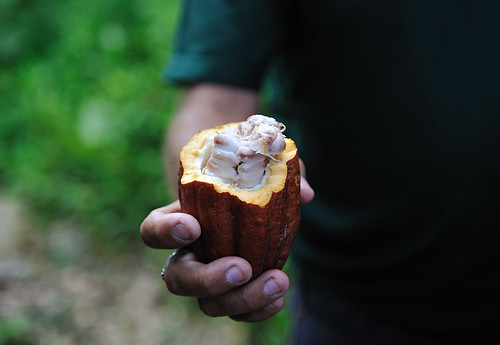
CC Image: cocoa beans

Today is Valentine’s Day, the day of chocolate treats. But have you ever considered where your chocolate comes from? Like, at the beginning of the supply chain, with cocoa beans? Neither had I, until a few days ago. Now, my appetite for chocolate has substantially diminished, especially knowing that most of the chocolate I have eaten to date has likely not been child slave labour-free.

The chocolate industry is a multi-billion dollar global industry including key players such as Nestle and Hershey. The world loves chocolate. Our waistlines may be a testament to that.

About 60% of the world’s cocoa beans are grown in the poor West African countries of the Ivory Coast and Ghana. We depend on these countries for our chocolate, but these governments depend on cocoa for the revenue they provide in taxes. The locals depend on cocoa, simply to put food on the table.

Such inequity has led to one of the worst forms of child labour. Children are trafficked in these two countries, working long hours harvesting cocoa beans, often with dangerous equipment like machetes, with little food, no school, and no pay. Money goes to their traffickers, who are often family members who desperately need the money.

This grave problem is highlighted in an eye-opening documentary that was recently aired on the CBC (available only for another month). A BBC journalist bravely goes undercover in these poor countries to determine for himself the extent of child slave labour, as well as what the world’s cocoa companies are doing to remedy both child trafficking, and inequities leading to trafficking (it turns out unsurprisingly, not nearly enough).

The journalist also poses as a cocoa bean buyer and makes some chocolate of his own: a chocolate bar made with 100% child labour, clearly marked and all. Would you buy it after seeing this? Probably not; all of those interviewed were appalled. But would you pay more for child slave labour-free chocolate?     

This demonstrates clearly that things we do on one side of the world can have far reaching effects. Our demand for chocolate in the West fuels child labour. Not knowing is one reason for inaction, but now we know; meaning that now there are no excuses for not demanding and paying more for child slave labour-free chocolate. The next step will be a labeling issue, like Fair trade coffee, allowing us to recognize the more socially responsible companies. 

Global health should be everybody’s problem.

Thursday, January 26, 2012

We shouldn't be giving cooking the finger

Happy New Year and all that jazz. The last few months have been a bit hectic for a variety of reasons, some of which I'd like to forget :)  I am going to try to post on a more or less two-post per month schedule, but am also trying to finish this damn PhD, and now am teaching! We'll see how it goes... 

Today's post is more of a pet-peeve of mine.  


There is some evidence to show that eating out of home is related to consuming more energy and more energy from fat; results that appear to be more consistent among adults than childrenPresumably, 'out of home' means eating prepared meals at fast food or sit-down restaurants. The authors of this review, however, indicate that the definition of 'out of home' was context-dependent. That's important to keep in mind, but for the sake of my argument, let's just say that eating out more often, compared to cooking your own meals, is related to consuming more calories and can plausibly be related to obesity.  Also, I would imagine that if we cooked for ourselves or family-members more often, we'd be eating substantially less salt and waste less food and packaging.


Now, I am an advocate of eating more home-cooked meals, as are many of my colleagues; however, the problem is much more nuanced than simply blaming people and telling them they need to cook more. One such nuance is marketing...I absolutely hate this marketing campaign by Boston Pizza: Finger cooking and giving cooking the finger...It's admittedly funny and catchy, but makes me angry and sad all at the same time, and also suggests that males might be incompetent (as pointed out by a male friend of mine).


 I enjoy watching Jim Treliving on CBC's Dragon's Den.  He's certainly nicer than Kevin O'Leary. From their dealings I get that it's all about making money. The more successful a marketing campaign, the better it is for the company. But this particular campaign crosses the line for me Jim. I don't even watch TV that often and I see it all the time. I've never seen a restaurant or fast food company actively target a social norm in this way. We need to make cooking at home easier, cheaper, more convenient, and stop marketing campaigns like this. Otherwise, cooking, along with the skills that go with it, will go the way of the woolly mammoth.

Friday, November 18, 2011

Be back soon - short hiatus

Sorry for being MIA. I am taking a short break from blogging due to school. I hope to be back in the new year (or hopefully sooner). 


~Megan

Monday, October 31, 2011

Graduate school roundtable

I am a part of a blog roundtable on graduate school, chaired by my colleague Atif Kukaswadia on his blog: Mr Epidemiology. The first post introduced the panel. Today's post asks us why we decided on grad school. A series of questions will be answered by us throughout the month of November. If interested, you can subscribe to Atif's feed. The dates that particular questions with their answers will be posted are outlined at the bottom of the first post. This will be particularly useful for those of you undecided about whether to go to grad school or not, and those that have decided but are nervous/unsure of what to expect. Others may also find it entertaining. Enjoy! 

Thursday, October 13, 2011

Am I single-handedly perpetuating the negative effects of food insecurity?

CC Image: Franco Folini 

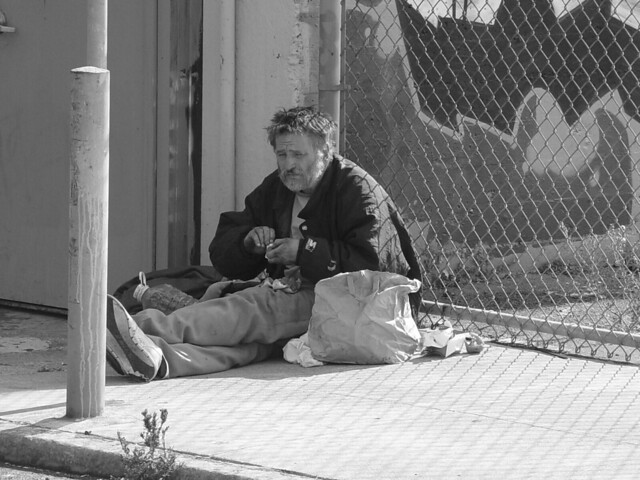
Now I am not generally one to give money to a pan-handler. If I do give something, it’s generally a snack (usually healthy) if I have one on me. This has been met with different responses: scorn, indifference or thankfulness.  I have offered a few times to go and buy something to eat or drink but have never been take up on the offer, until today.  I regret though, that I may have contributed to, not helped the problem of food insecurity.  


Today, I had walked to an appointment along Dalhousie Street in Ottawa (for those of you who know where that is) and was on my way back to work, when I stopped to grab something from my purse and rearrange my things. I was soon confronted by a shabbily dressed young man. Since I was stopped, kneeling over my bag, I was his captive audience. He proceeded to tell me all of his problems, from being kicked out of the shelter down the street because of a fist fight, to not having enough to eat. He also assured me that spending money on drugs was not an issue because he doesn’t use them. I was waiting for him to ask me if I could give him money, but that didn’t seem to surface from the avalanche of words spewing from his mouth. I interjected, “can I buy you something to eat?” He replied with “oh yes, yes, please, I’m so hungry.”

At this point I should maybe provide a little background on food insecurity. The prevailing definition of food security is “a situation that exists when all people, at all times, have physical, social, and economic access to sufficient, safe and nutritious food that meets their dietary needs and food preferences for an active and healthy life.”  Food security and insecurity are on opposite ends of a continuum. Food insecurity has different stages of severity starting with not being able to buy and eat what one would like. This gets at issues of quality including variety, safety, nutrient content, and the caveat that foods must last and not go to waste. The next stage involves a decrease in quantity which might or might not be accompanied by hunger. Finally, the most severe stage is the complete absence of food intake (going completely without).

Food security is a basic human right, but from the 2007-2008 Canadian Community Health Survey, 7.7% (961,000) of Canadian households were food insecure. And keep in mind this is for people with a fixed address, unlike homeless people and those in shelters, so the number is likely higher.  I imagine this figure will only climb as our (Canadian) income gap rises and worldwide economic problems deepen; unless of course, our social policies change, but that’s a discussion for another day.   
   
Remember that a key part of food security covers quality – we should have access to healthy, nutritious food.  Being food insecure is related to decreased quality of foods consumed and nutrient inadequacies, which makes intuitive sense. 

I regret that although I was providing food in principle, it was not of the nutritious variety.  We went to the nearest restaurant, Garlic Corner, and I said to the guy “get what you like, I’ll pay for it.” He hummed and hawed, something about wanting breakfast down the street because “these guys don’t serve it past noon, and they are really, really slow.”  Then it was he didn’t eat meat but didn’t want any of the vegetarian options. Either the choices at Garlic Corner were not healthy enough (which is partially true) or he wanted money instead, of which I am guessing the latter. Anyway, I told him that I had no cash, so he settled on a Nanaimo cake thing and a red bull. All crap. I mulled all of this over on the remaining walk back to the office. What have I done here? Propagated the problem? Should have I stipulated what he order, ordered it for him, went to a better restaurant, what?

What do you think? I tried to help out a fellow human in need, but did I really? Even if I had stipulated what he had ordered, it would have been denigrating.  The other alternative would have been to ignore him, pack-up my things and continue on as if I had not seen or heard him. While I have ignored street people in the past, I am growing increasingly uncomfortable with it, trying now to at least acknowledge them as people when I walk by – a smile, node, or hello. I don’t mind providing snacks here and there but I’d almost rather do nothing if it means that the another red bull or Nanaimo cake gets sold and consumed. At the same time, it's food, pretty good tasting food at that. I would imagine that it's pretty hard to be concerned about nutrition when there are so many other problems to deal with.  That is the problem.


ResearchBlogging.org

Pilgrim A, Barker M, Jackson A, Ntani G, Crozier S, Inskip H, Godfrey K, Cooper C, Robinson S, & SWS Study Group (2011). Does living in a food insecure household impact on the diets and body composition of young children? Findings from the Southampton Women's Survey Journal of Epidemiology and Community Health, June 7 : 10.1136/jech.2010.125476


Kirkpatrick SI, & Tarasuk V (2008). Food insecurity is associated with nutrient inadequacies among Canadian adults and adolescents. The Journal of nutrition, 138 (3), 604-12 PMID: 18287374
Friday, September 30, 2011

Evaluating urban planning initiatives to increase active transportation

Ottawa Sun: Laurier St. bike lane in Ottawa (ON), Canada
Urban planning and epidemiology need to become better friends. Rigorous epidemiological studies that assess the health impacts of urban planning interventions are desperately needed. These studies can more reliably tell us what works and what doesn’t, and therefore where best to put our hard-earned tax dollars. I’m not sure why they are lacking. Money? Time? I guess they are all good excuses. But in the grand scheme of things, I would settle for even just a simple before-after study – something that I think is more than feasible.

Ottawa recently implemented a segregated bike lane pilot project on Laurier Street, running from Bronson to Elgin Streets. The lanes are blocked off from traffic with concrete curbs, plastic poles, parked cars and planter boxes. New road markings (including those gross green boxes) and signs tell cyclists where they should be. Most on-street parking has been removed and some bylaws have even changed, such as no right turns on a red light, which protect cyclists from absent-minded motorists. The project is part of the City of Ottawa’s plan to become a greener and more sustainable city.

All of this is great news for cyclists (and environmentalists), even though it has received some grumblings from residents and merchants on Laurier Street who have lost parking spots as a result. Since the lanes were open on July 10, 2011, almost 117,000 people have used them (that is, passed a counter at Laurier and Metcalf). Wow, that sounds like a lot of people…but wait a sec…How many cyclists used Laurier before? Maybe the same number of people used Laurier last year from July 10th to September 28th, 2010. So this number really tells us nothing. We have no idea what the ‘success’ of the pilot project is defined as either. Is it a certain percentage increase in the number of users, fewer accidents, more commerce, increase in physical activity, etc.? The main points I am trying to make here are that the city could have at least placed a counter in the same location BEFORE they implemented the project, as well as determined significant outcomes a priori and communicated those to the public. I don’t think it would have been that much more costly.

 I’d like to highlight that this would be something that is needed in the very least. These types of designs that use counters to count the number of users before and after are not robust against bias and cannot capture all that we would really like to examine. Here are a few examples why: 
  • We can only count users and not individuals so likely we are double, triple counting, etc. Perhaps increase in usage is only by those people that already cycle on the road 
  • If counters are electronic, I'm not sure if they can discriminate between cyclists and people that shouldn't be using the lane (such as skateboarders, motorized scooters, etc.)
  • We cannot determine impact on the health outcomes of individuals living nearby, such as increased physical activity or decreased obesity
  • Increase/decrease of cycling on Laurier could actually be due to other factors that we have not accounted for or reflect only secular trends (not due to the new lane)
I have had a very hard time finding an urban planning intervention with the intent of increasing active transportation/physical activity, or decreasing obesity, that has been well conducted. There is also the added caveat of residents actually knowing about the change to their environment. For example, if they don’t know about a new bike lane, trail system, or park how can they use them?

A study by Evenson et al (2005) perhaps is a basic model to follow– with, of course, some upgrades (e.g. addition of a control group). They set out to determine if a new rail trail built in Durham North Carolina (US) significantly increased time spent in leisure activity, moderate and vigorous physical activity, and active transportation of residents living nearby. 


Participants 18 years or older living within 2 miles of the trail were randomly recruited to participate in two telephone surveys conducted before and after introduction of the trail (n = 366). Questions were largely based on the Centers for Disease Control and Prevention’s Behavioural Risk Factor Surveillance System.  The researchers did not find that the new trail had any effect on the outcomes they looked at. There were some issues with the study which may explain why they did not find anything. Some examples include: 
  • The after measurement occurred just 2 months after the trail opened – this may not have been a sufficient amount of time (e.g. residents may still not have known about it). In fact, 38% of respondents said they weren’t aware of the trail [Correction - this should be 11.3%, 38 was the n]
  • The after measurements occurred in November, whereas the before measurements occurred in summer and early fall. In Canada at least, we tend to be outside less as the winter approaches versus in the summer
  • Low response and retention rates. The people who responded were likely not representative of the population (they already had high baseline rates of activity). What were the people who didn’t respond like? 

There are some other issues that I won’t get into but I think it’s a basic study that could easily be implemented by urban planners, with the help of public health professionals or universities with epidemiology or program evaluation departments (to increase the study’s robustness which is very important)! Who knows, maybe the City of Ottawa has done all of this and we just don't know about it - I'll give them the benefit of the doubt. Regardless, I truly think this is a worthwhile and necessary transdisciplinary endeavour that will benefit society as a whole. And don't get me wrong, I am for increasing biking infrastructure. I just want to make sure we can quantify its benefits and that we do it in the best possible way.     


ResearchBlogging.org

Evenson, K., Herring, A., & Huston, S. (2005). Evaluating change in physical activity with the building of a multi-use trail American Journal of Preventive Medicine, 28 (2), 177-185 DOI: 10.1016/j.amepre.2004.10.020

Wednesday, September 21, 2011

Behavioral economics - a way to fight Big Food?

Eating that double-fudge brownie or entire bag of chips ultimately comes down to individual choice. However, it is becoming more and more apparent that we are not really free to choose – our choices arise from opportunities or barriers that are structured in large part by the places in which we live, work, play, or go to school. The abundance of ultra-processed, energy –dense, nutrient-poor foods that are readily available, heavily marketed, cheap, and tasty, presents a large barrier to many of us in terms of following a healthy diet. How can we counteract this to make healthier foods like fruits and vegetables the more attractive option? I’ve been thinking about this a lot lately, wondering if the only way is to make these foods just as convenient to consume, such as in healthy prepackaged meals, and somehow find the means to heavily market them in the same way as Big Food.

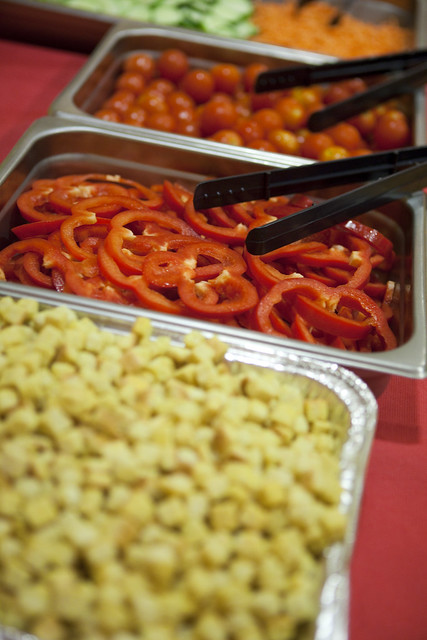
Behavioral economics may be a simpler way – changing the layout of cafeterias, stores, and restaurants to subtly influence people to make the healthy decision.      

Smarter lunchrooms is an initiative out of the Behavioral Economics and Nutrition Center at Cornell University concerned with doing exactly this. Their philosophy is that draconian school food policies, like banning junk food from cafeterias, don’t work. Often children will skip lunch, bring in their own snacks, or head to a fast food restaurant.  Principal investigators Brian Wansink and David Just think that ‘nudging students toward making better choices on their own, by changing the way their options are presented’ is a better option. I tend to agree.

Although the epidemiologic evidence doesn’t look like it’s strong (most studies appear to be case studies or before-after and I’m not entirely sure of the methodology), I think the results of some of these interventions are worth discussing, especially since most of these are low cost and low effort for the school to implement. Hopefully some larger scale, well designed randomized controlled trials are on the horizon (us epidemiologists can only dream).  Here are a few examples from Wansink & Just, as well as their colleagues (virtually verbatim from their website):

  1. Putting nutritious foods like broccoli at the start of the cafeteria line, rather than in the middle, increased sales by 10-15%      
  2. Switching apples and oranges from a stainless steel pan to a fruit bowl more than doubled fruit sales
  3. Giving healthy food choices more descriptive names like ‘creamy corn’ rather than ‘corn’ increased sales by 27%
  4.  Moving the chocolate milk behind the plain milk led students to buy more plain milk
  5.  Putting the salad bar in front of the check-out register nearly tripled sales of salads
  6. When cafeteria staff asked students if they wanted a salad, salad sales increased by a third
  7.  Requiring that desserts such as cookies be paid for in cash (not with lunch tickets or debit cards) led students to buy 71% more fruit and 55% fewer desserts
  8.  Keeping ice cream in a freezer with a closed, opaque lid significantly reduced ice cream sales
I think that something like this could in some way be translated to other shared dining spaces such as cafeterias in workplaces, hospitals, and universities, to name a few. Google has actually shown us that it is feasible. Now whether its employees are healthier for it, I'm not sure if it has, or will ever be formally evaluated. Too bad..Seems like a waste of a good intervention study. 

ResearchBlogging.org

Just D.R.,, & Wansink B (2009). Smarter Lunchrooms: Using Behavioral Economics to Improve Meal Selection Choices:The Magazine of Food, Farm, and Resource Issues, 24 (3)