As regular readers and/or Twitter followers are likely well aware, I’m not exactly 100% pro-capitalism. So it may come as a bit of surprise that today’s post gushes over one particular money-making machine: Google.
Now, Google has skeletons in the closet like any other business, but a lot of what I’ve read depicts it as a company vested in keeping employees healthy and happy, and dedicated to reducing its ecological footprint. It's business model demonstrates that companies can be sustainable while also profitable; two concepts that I think a lot of libertarians believe are mutually exclusive. Please check out the videos and articles below for a few examples of how socially responsible this company is.
Hopefully I will be back to a more or less regular blog posting schedule now that I am back from my trip overseas. I went to Dublin (Ireland) and Edinburgh (Scotland) for a few weeks of vacation and a couple days of conferencing. I was lucky enough to get to do some biking both inside and outside of the city (the city being Edinburgh). Today’s post is more of a reflection on biking culture and infrastructure in Ireland and Scotland versus here in Canada. I was only there for a short while so I am sure locals will have much more insight than I; don’t be afraid to let me know if I’ve got something wrong.
Both Dublin and Edinburgh appear to make extensive use of on-street bike lanes. These are generally shared with bus lanes and are often painted red, which makes them impossible to miss by motorists. I noticed continuity of markings and signage (i.e. I as a cyclist knew where I was supposed to be at most times) and priority for cyclists (e.g. areas allocated for cyclists in front of motorists at intersections – see picture below). Bike lanes also continued on more rural roads, along with pedestrian islands to slow traffic, which you don’t see here in Canada. Even though streets were busy and I had to ride on the opposite side of the road I did not feel scared to be on the road, perhaps because motorists are more cyclist-savvy and no one yells or honks at you.
On-street marked bike lanes in Dublin, Ireland
The infrastructure in these cities has made me wonder if on-street marked bike lanes are the way to go. Don’t get me wrong, I am not against segregated lanes, but on-street marked lanes would likely be cheaper, more direct, and make fewer people angry (e.g. merchants who lose parking spaces). Changing our cycling culture requires, at the very least, making friends not enemies (I'll talk about this in an upcoming post).
I’m just not sure if on-street marked lanes are safer for the average person and I doubt that parents would be more willing to let their children commute anywhere on them versus segregated lanes or a sidewalk. At the same time, some segregated bike lanes can be dangerous because motorists can’t see you. For example, in Hull, there is a National Capital Commission off-road pathway that crosses three roundabouts; it is blocked to traffic by a wall until you have to cross each roundabout. Motorists coming into and out of the roundabout are looking for other cars and often nothing else. Cyclists are quicker than pedestrians and may appear out of nowhere to motorists. I have had a few close calls. Being on the street makes you seen and forces motorists to more or less treat you like a car. This is why I cycle on the road in this area, even with motorists motioning to me in some sort of code that I think means I should be using the ‘perfectly good bike lane’ beside me.
I think therefore that a comparison of segregated and on-street marked bike lane safety is beside the point (the evidence shows that both may be beneficial compared to unmodified road ways, and that the sidewalk is the worst). I guess the appeal of segregated lanes is that they may induce feelings of safety, whether real or imagined which could motivate people to actively commute. My point is that we may want to investigate more wide-spread use of on-street marked bike lanes that are highly visible as in Dublin and Edinburgh, and/or with buffer zones as in New York City (see picture below), as these could improve both real and imagined safety in the same way, improve route directness, be more cost-effective, and piss fewer people off.
Reynolds, C., Harris, M., Teschke, K., Cripton, P., & Winters, M. (2009). The impact of transportation infrastructure on bicycling injuries and crashes: a review of the literature Environmental Health, 8 (1) DOI: 10.1186/1476-069X-8-47
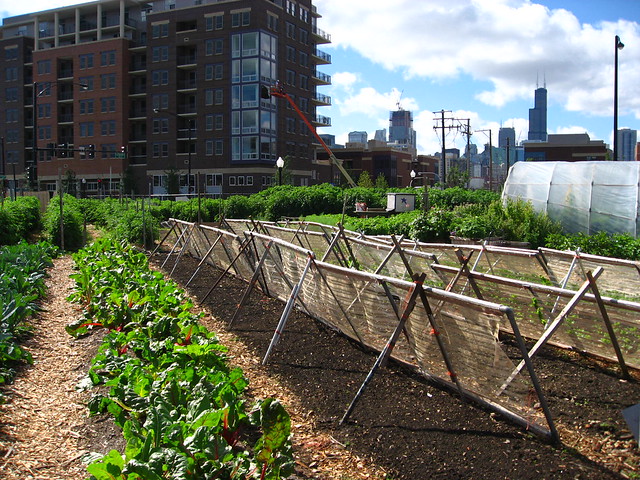
One potential way to combat the obesity epidemic and environmental degradation all in the same go is urban agriculture. I’ve been thinking a lot about this lately, wondering if it is feasible in climates like New York City and Toronto, if it can actually generate enough food to continuously feed a city, and of course, also improve diet quality at a population-level.
Urban agriculture refers to agricultural practices (usually intensive) within and around cities that compete for resources such as land, water, energy, and labour – but produce food, plant and animal-based pharmaceuticals, fibre, and fuel that benefit the local population (crops and animal husbandry included). This can occur at the micro and meso scales of cities – e.g. using vacant lots, backyards, street verges, green roofs and walls, balconies, community gardens, urban parks, and individual collective garden allotments. Larger scale practices can include commercial farms, nurseries, and greenhouses, which would likely operate in peri-urban areas and be private/corporate, for-profit entities.
There are a number of other potential benefits for UA, aside from food, food security, and pollution/land degradation that I hadn’t initially thought about. These include:
Employment and income
Personal skill development
Social interaction/community or social capital-building
Increased well-being
Highest productive use of land (with respect to vacant lots)
Diversified industry base
Light, odour, and noise abatement/absorption
I was surprised to read in a recent journal article that in developed countries like Australia, UA is responsible for 15% of state vegetable and fruit production. And that in Sydney, UA accounts for 1% of land area but contributes $1 billion in agriculture produce. Those are interesting numbers, but I still feel skeptical; this is Australia after all, where temperatures rarely fall below freezing. And I imagine that most of this occurs at the macro, not the micro or meso scales.
Most research on UA in terms of any type of outcome, not just health (e.g. environmental, social, and economic) has been in the form of case studies, with no real quantification of its benefits. It is difficult to build an argument for this practice with no hard evidence. At the same time, it has the potential to positively affect many different aspects of society, not just health. For this reason, I think UA is worthwhile.
I don’t, on the other hand, believe that farming at the micro and meso scales of cities (involving individuals and communities), especially in northern North America, can continuously feed local residents. Farming is time-intensive, and requires certain knowledge and skills. And to feed families year-round in North America, would require up-front investment for equipment like greenhouses. This is not compatible in a culture that breeds convenience and instant gratification, where for example, we don’t seem to have enough time to clean out reusable containers for our drinks, so instead buy crates of water bottled in plastic that can be thrown out or recycled.
This may be different if UA at the micro/meso level is a social business, or a private/corporate entity. An example is the Science Barge in New York City, a 1300-square-foot greenhouse that floats on the Hudson River. It is a sustainable urban farm powered by solar, wind, and biofuel and irrigated by rainwater and purified river water. Fresh fruits and vegetables are grown using recirculating hydroponics and aquaponics. And surprisingly, despite floating on the river, is a prototype for a sustainable roof-top garden (more information on the Science Barge can be found here).
Another example is Gotham Greens, a roof-top greenhouse in Brooklyn, NY that grows vegetables and herbs for local restaurants and retailers using sustainable methods. They expect to produce 80 tons of produce yearly, and employ residents in nearby communities.
Gotham Greens greenhouses
Macro-level UA in urban fringes using sustainable methods has potential, but right now is often more costly or harder to access than buying produce at supermarkets like Loblaws or Metro. Government policies (e.g. zoning) and community initiatives that support local farms will be needed to make buying local economically feasible and physically accessible to everyone. An example of this support is Equiterre, a Montreal-based organization that maintains a directory of Community Supported Agriculture (CSA) farms that must be local and organic, serving primarily low-income sharers (clients that share the risk of farming). The organization connects potential sharers with CSA farms, and coordinates drop-off points that increase accessibility for sharers, while at the same time minimizing transport time and cost to the farms. CSA produce prices are cheaper than what you would find in a supermarket, and the average farm is family run and has between 30-80 sharers.
In terms of improving diet quality, many questions about UA in developed countries remain – can individuals and communities do it to feed themselves year-round? My guess is no. Is it economically feasible for social businesses, and for-profit private/corporate entities in urban and peri-urban areas? If so, will it be socially equitable and improve diet quality at the population-level? Given UA’s potential to benefit many different areas of society, I believe it is a worthwhile pursuit irrespective of scientific evidence. That being said, if further investment (time, money, policies, etc,) is to be made in UA, rigourous trans-disciplinary studies need to be conducted to quantify its benefits.
Pearson, L., Pearson, L., & Pearson, C. (2010). Sustainable urban agriculture: stocktake and opportunities International Journal of Agricultural Sustainability, 8 (1), 7-19 DOI: 10.3763/ijas.2009.0468
There is no disputing that diet and physical inactivity are contributors to the obesity epidemic. A recent debateinvolving Drs Yoni Freedhoff and Bob Ross showed that both are important (I don’t think there was consensus in the audience as to who won). What I want to highlight in this post is that, from a sustainability perspective (see my previous post for a definition), it is a moot point to argue over the relative importance of each.
Our food system has changed dramatically over the last few decades. We can get tasty, energy dense, often nutrient-poor foods anywhere, for very little money. And we’re constantly bombarded with advertisements to buy and eat these foods. What’s more is that we have almost completely engineered physical activity out of our daily life. For instance, most jobs nowadays require sitting for 8 hours (I am sitting as I write this), escalators and elevators do the climbing for us and are easily accessible, and we live far from where we work, play, or go to school so often must rely on the car, which involves more sitting.
I think there is a consensus developing among obesity researchers and health professionals that obesity (or diabetes or other related diseases) is not entirely the fault of the individual. In my opinion, unhealthy behaviours are a natural response to our “obesogenic” environment, which increase a person’s risk of developing obesity. So then why do we expect that prevention or treatment efforts targeted at the individual will be effective and maintained over the long-term? To fix our deranged food system and culture of sitting requires interventions at higher levels of social organization, including changes stemming from the local community, municipal, provincial, and national governments, as well as the global community.
In the last 10 years there has been a boom the number of scientific studies examining how our environments, beyond the household, are associated with obesity. The majority of these studies have been observational, with a cross-sectional design, and have looked at things like how street infrastructure, fast food restaurant density, and socioeconomic-level of residential neighbourhoods relate to obesity among adults. Children have been less studied in this regard, as well as other types of environmental exposures, such as social interactions, and other types of areas, such as those around workplaces and schools (since these are likely not in one's residential neighbourhood). Perhaps because of the complexity involved, even fewer studies have examined how specific policies and programs may influence physical activity, diet, and obesity at higher levels of social organization (you can find an example here).
Certainly more studies are needed given the weaknesses in the current literature, as well as the dearth of information in some areas. But I would like to put forward another argument. Increasing the “walkability” and “liveability”of our shared spaces - *may* decrease obesity but will likely help to decrease green house gas emissions. Making it easier for us to get and cook wholesome foods (namely fruits and veggies) that are free of pesticides, antibiotics, and other chemicals, and harder to get meat, as well as processed foods *could* decrease obesity, but could also help to reduce land degradation, pollution of our water sources, and climate change. All of these things are good for our health in ways other than on our waistline.
My argument is that if there is a focus on sustainability, which these changes imply, population and environmental health should follow. We need to focus on BOTH the diet and physical activity side in order to not only combat obesity, but a myriad of environmental problems and related health ailments like diabetes and asthma. These changes are complex, don’t happen overnight, and may bring with them a whole set of new problems (the potential problem of denser living leading to a decrease in indoor air quality immediately comes to mind as an example).
Nonetheless, I think we need to move towards rigorously implementing and evaluating interventions that increase sustainability – looking to see if they a) improve the environment, b) reduce obesity, or improve lifestyle behaviours, and c) that they do not negatively impact health in other ways (a post for another day).
Feng J, Glass TA, Curriero FC, Stewart WF, & Schwartz BS (2010). The built environment and obesity: a systematic review of the epidemiologic evidence. Health & place, 16 (2), 175-90 PMID: 19880341
Today’s post focuses on why you should eat yer fruits and vegetables, and how it may be possible to get more of us to do so.
At a population level, the evidence for increasing fruit and vegetable (F&V) consumption and decreasing obesity isn’t super strong [1]. But I still think that it’s at the heart of how to make a healthy population – coupled of course, with decreasing intake of crappy, energy dense, nutrient poor snack foods and sugar-sweetened beverages, as well as growing food in sustainable ways (e.g. sans pesticides). For instance, insufficient intake of F&Vs is estimated to be responsible for around 14% of gastrointestinal cancer deaths, about 11% of ischemic heart disease deaths and about 9% of stroke deaths worldwide [2].They may even be able to make our immune systems healthier and decrease common communicable diseases [3].
Fruits and vegetables have seemingly magical properties – they are abundant in vitamins and trace minerals, often are high in fibre, and are low in calories. But we don’t get enough of them – even in developed countries. Just to give you an idea, in 2004, only 30% of Canadian children (aged 4- 8 y) and 50% of adults met dietary recommendations for F&V intake [4]. More concerning is that children aged 4-18 years obtained a higher percentage of their calories (22.3%) from foods that are not recommended in the Canadian Food Guide (food high in sugar, fat and salt and low in nutrients) than from F&Vs (13.9%) [4].
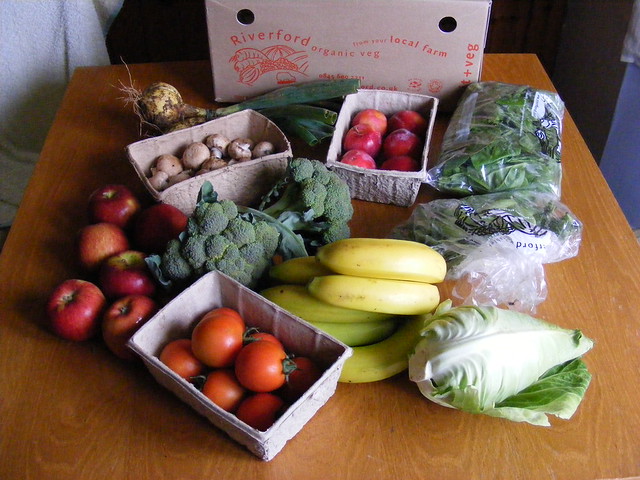
How can we increase intake? I think it’s all about making F&Vs easier to buy and prepare. This means that they are easily accessible, cheap, and offered in healthy, ready-to-eat meals (not only as whole foods).
Grocery stores have been identified as potential means to increase F&V intake – through their influence on availability, access, pricing, promotion and information on the health properties of F&Vs [5]. Churches, childcare centres and the broader community may also represent effective settings to implement environmental initiatives.
According to Glanz & colleagues:
"Policy and environmental approaches may have greater impact [on F&V consumption] because they influence the overall environment, reach many people, and are less costly and more enduring than clinical, individually oriented, or small-group educational interventions"
Unfortunately, the evidence for effectiveness in increasing F&V intake through these means is not strong (and even lacking with regard to obesity). But I don’t think that should be a deterring factor, especially given how difficult it is to actually implement an evaluation in this type of setting, let alone a rigorous one.
There have been some innovative environmental initiatives that I have come across recently, which show great promise, but have not been formally evaluated (hopefully in some way soon). Descriptions and links can be found below:
The New Haven Health Corner Store (US) – member corner stores add healthier choices to the aisles of chips, soda and salty snacks, such as fresh produce and low-fat dairy products. Stores also have added advertising (including an easy to identify logo) and giveaways to increase awareness among consumers about healthier choices. The website highlights a study of why it might be important to target corner stores
Fruixi (Canada) – Mobile F&V bike carts operated by young volunteers around Montreal parks (kind of like getting street meat). All F&Vs sold are from local producers and at prices less than what you would have to pay in grocery stores. Fruixis will soon be available around University of Montreal affiliated hospitals. Unfortunately, the service is not available in winter.
Fresh Moves Mobile Product Market (US) – A great idea – retrofitting a bus to become a one-aisle produce market for underserved communities in Chicago. Conventional as well as organic and local produce are available at affordable prices.
A healthy (for-profit) street food business called KeBal (Jakarta, Indonesia) – Targeted to children aged 5 years and under with branding, advertising, and health promotion initiatives. The menu was created by nutritionists and menu items are made from non-processed, whole foods. This is an interesting concept that could be translated to children and adults in developed countries.
Food Oasis, a virtual food market – a platform that works through consumers text messaging to communicate their individual needs. These messages go to a central system, where these small orders are aggregated by suppliers into economically-viable groups. Suppliers, including corner stores, local farmers or large grocery chains, can negotiate with consumers to agree on a price and central neighborhood delivery location (e.g., churches, day care centers, employment centers). This platform is still in preliminary stages of development.
Other environmental interventions that deserve further thought and investigation include making high calorie, nutrient poor foods harder to find and the display of fruits and vegetables more appealing and easier to access. A great example of this can be found here. Glanz and Yaroch also recommend establishing farm stands at large sports events; “cross-promotions” (e.g. bananas sold with cereal) and promotion of pre-packaged foods (including frozen) with high F&V content in grocery stores; as well as F&V sold in convenience stores as ready-to-eat or ready-to-heat food dishes.
Fruits and vegetables are good for us and we need to eat more of them. Environmental interventions can make the healthy choice the easier choice. For these initiatives to work they have to make F&Vs easier to choose over crappy food – so this means that they have to be convenient, at least the same price, easy to access, and tasty. And one intervention may not make a dent in our diets or our waistlines - this will require environmental interventions in multiple settings, making evaluation a tall, but necessary order.
[3] Villamor E, Fawzi WW: Effects of vitamin a supplementation on immune responses and correlation with clinical outcomes. Clin Microbiol Rev 2005, 18: 446-464.
[5] Glanz K & Yaroch AL. Strategies for increasing fruit and vegetable intake in grocery stores and communities: policy, pricing, and environmental change. Preventive Medicine. 2004; 39: S75-80 http://www.med.upenn.edu/nems/docs/Glanz_Yaroch_2004.pdf
I am an intense believer in the social determinants of health and looking at health problems through a social-ecological lens (i.e. determinants of health exist at multiple social levels of influence and are not just attributable to the individual or to the healthcare system). I think this is why I’ve also gotten incredibly interested in politics – from this perspective, government policies can influence population and environmental health. An interesting social determinant of health, social capital, has made me realize how we as individuals can collectively make a difference in shaping the quality of our shared spaces, and potentially overall community health – through influencing policies and working with government.
Social capital, a concept originating from the work of Robert Putnam, among others, embodies the norms of reciprocity (gift giving with the expectation of receiving), social and civic participation and trust in society. Another, complimentary view is that social capital refers to the network of social relationships that provide access to resources. Regardless of the definition, when you have more of these things you have more social capital (sometimes called cohesion). Although both definitions are relevant, I am speaking more to the former definition in the discussion that follows.
Richard Wilkinson was the first to introduce social capital to studies on health. He found that societies that are more socially cohesive, with smaller income gaps (more egalitarian) have higher life expectancies and lower infant mortality rates. Other authors have found that societies with higher levels of income inequality and lower social cohesion have higher levels of crime and violence and higher mortality rates. At a more local level, it has been found that residents who are more involved in the community tend to be happier where they live, regardless of the physical quality of their homes. Some studies have even found that as the level of social cohesion in an area increases, the prevalence of obesity decreases.
Social capital is complex – these studies show how it may influence health. An obvious explanation is that it improves the quality of our immediate social and physical environments, as well as society at large. One caveat is that social capital itself can be shaped by many different factors operating at many different levels of social organization (e.g. at the neighbourhood/community, region, province, and country level), which thus impacts the quality of our spaces. Social capital therefore, is not a one-way street, rather an intricate web of interaction.
Open space in question, complete with dog
My plan is to add to social capital and hopefully improve the quality of my neighbourhood, by becoming more civically engaged. I’ve read a lot lately about how greenspace can potentially be beneficial for mental and physical health, and how it is also good for the environment (I have blogged a bit about this too). I enjoy being outdoors in natural areas – it makes me happy – and I also have a dog, with no back-yard. Unfortunately there are no dog parks or interesting greenspaces within walking distance of my home. I often take my dog to an open space close by. It’s a piece of land that separates two suburban neighbourhoods, with trees and a man-made marsh that was constructed to deal with street water runoff. Other neighbourhood residents also bring their dogs, kids toboggan down the banks of the marsh in the winter, and residents of houses bordering the space often use it as their personal dumping ground (a pet-peeve of mine discussed in a previous post). There is no landscaping and the space is never maintained.
Neighbours like to use it as their own personal dump
I would really like to have this space converted into a dog-friendly park (that is maintained), with perhaps a community composter (since everyone dumps their s**t anyway), and even a community vegetable garden. Although, my partner brought to my attention that probably dog parks and food don’t mix – I’ll have to think the vegetable garden through a little bit more…
I really had no idea how to go about making this happen until I read an interesting post on the City of Gatineau’s website:
“Ville de Gatineau is revising its land use and development plan. Would you care to share your thoughts about how your neighbourhood or the city should develop? This is the time! This revision will extend over three years, with meetings scheduled to start this spring!”
This first meeting for my area is this June the 6th. I plan to go to see how I can voice my ideas and connect with others who may share my view and/or be able to help me. This will be the first time (other than voting in various elections) that I am involved in the running of my community. I’ll keep you updated as to how this pans out. And I urge everyone else to do the same. Finally, I will not be a hypocrite, especially with respect to my own research!
Leal C, & Chaix B (2011). The influence of geographic life environments on cardiometabolic risk factors: a systematic review, a methodological assessment and a research agenda. Obesity reviews : an official journal of the International Association for the Study of Obesity, 12 (3), 217-30 PMID: 20202135
Home cooking is where it’s at. In my view, getting people to cook at home with wholesome foods is one way to combat the obesity epidemic. And of course, home cooked meals *can* taste great; that’s chef-dependent of course. Foods prepared outside of the home are higher in calories, fat, and sodium, and a recent meta-analysis found that children and adolescents who eat shared family meals at least 3 times per week are less likely to be overweight or eat unhealthy foods than children who eat fewer shared meals. There are two main problems with home cooking, aside from the multitude of barriers to actually being able to cook (e.g. time/work schedule, knowledge and skills). Rather, these are outcomes of cooking that I will discuss based on a recent experience.
First, we waste a whole lot o’ food. Research in the UK has shown that 2.2 million tonnes of food is thrown away due to cooking, preparing, or serving too much. That’s just food that we’ve managed to work with – it doesn’t include fresh produce, meats/fish, dairy, etc. In the US, 30% of all food is thrown away each year.
All of this waste is obviously costly, as we’re paying for food that we don’t eat. In the case of the US, this amounts to US$48.3 billion! But food waste is also harmful to the environment. Rotting food releases methane, one of the most potent greenhouse gases. A UK research group estimates that if food were not left to rot in landfills, this would be the greenhouse gas equivalent of removing 1 in 5 cars from the road. And we can’t forget all of the fertilizers, pesticides, and energy going into growing/raising food that we just toss into the trash.
Okay, home cooking is great but waste is bad. What do we do? Eating your leftovers is one way to get the best of both worlds. Hang on though, leftovers need to be handled and stored properly in order to avoid illness. I have a dietetics bachelor’s degree but am the worst for food safety (probably because more often than not I don’t get sick). I’m the one that leaves the ham sandwich in the car in 30 degree weather (that’s Celsius) all day and then eats it unperturbed on the way home from work. Or leaves a defrosting tenderloin on the top shelf in the fridge or even out on the counter for the entire day (both no-no’s).
But the other day, I did get sick – not badly mind but enough to make me realize that food safety does matter if I want to avoid having to take a day off of work. My significant other thought he was doing a service (which he was) by bringing home leftovers from a conference at work. It was some sort of pasta with a béchamel sauce and chicken. We reheated it in the microwave at home and ate about half of what was brought home. The next day, we both could not stray too far from the toilet…This was no coincidence – same symptoms and the pasta was the only thing we had in common for the previous 24 hours. We threw the rest of it out.
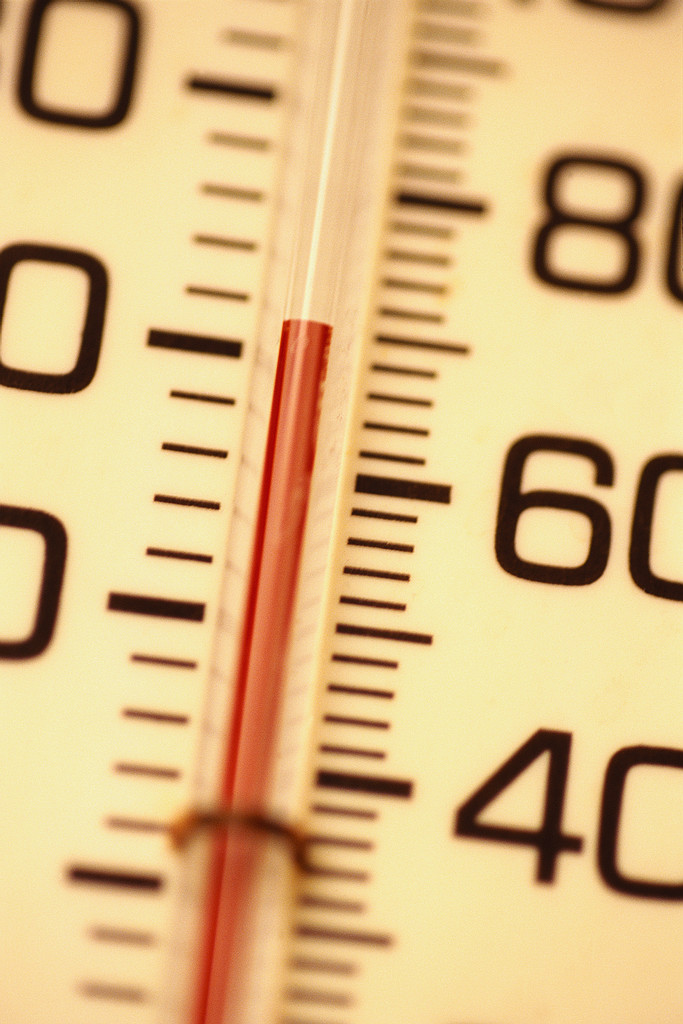
So what went wrong? I can’t say for sure because there are so many things that could have happened, but I’ll touch on a few here. It’s hard for bacteria to grow in foods that are held at temperatures less than 4°C (40°F) or more than 60°C (140°F) – in between is called the ‘danger zone’. When serving prepared hot foods, like this pasta dish, it is imperative that the food be above 60°C. Additionally, time is a factor. Food left out for more than 2 hours is more prone to bacterial contamination. Perhaps the pasta was held in this danger zone – something that caterers should know to avoid, or not thrown out after 2 hours. My partner may have also taken the pasta and unknowingly left it out for too long. Reheating the pasta at home didn’t seem to do anything. The Canadian Food Inspection Agency (CFIA) recommends reheating leftovers to 75°C – maybe we didn’t hit that mark.
When other people make your food there is always the possibility that they didn’t adequately wash their hands, or use clean serving utensils or pots/containers. That’s something out of your control but you can ensure that you do these things when you make your own food.
Other ways to deal with leftovers to prevent illness:
Put hot leftovers in shallow containers and place immediately in the fridge. Really hot items can be left out for a bit then put in the fridge after the steam stops. Leave lids off or wrap loosely until food becomes fridge temperature (to avoid explosions)
A great way to keep leftovers is to freeze them
Eat leftovers left in the fridge (as opposed to the freezer) within 2 to 3 days
Throw out uneaten leftovers - i.e. once reheated, don’t keep the left over leftovers
Thaw frozen leftovers in the fridge or microwave. This is something I need to think about doing – I always thaw my soup at room temperature
Never refreeze thawed leftovers – they should be eaten or thrown out
When reheating leftovers, stop the microwave half-way through and stir the dish in order to ensure even heat distribution (we didn’t do this with the pasta dish)
The CFIA recommends using a digital thermometer to check food temperatures but I don’t really see this as something that I would do let alone the general public. Maybe… if I get sick again….
And finally, when in doubt, throw it out!
The more we cook at home, the better for our health. But sometimes we cook too much. Instead of throwing out food, which is bad for the environment and our pocketbooks, think ‘leftovers for lunch’ and perhaps even for a second dinner. But be mindful of how you handle, store, defrost, thaw, and reheat leftovers.
Hammons AJ, & Fiese BH (2011). Is Frequency of Shared Family Meals Related to the Nutritional Health of Children and Adolescents? Pediatrics PMID: 21536618
Quested T, & Johnson H (2009). Household Food and Drink Waste in the UK WRAP