Monday, October 31, 2011
Graduate school roundtable
I am a part of a blog roundtable on graduate school, chaired by my colleague Atif Kukaswadia on his blog: Mr Epidemiology. The first post introduced the panel. Today's post asks us why we decided on grad school. A series of questions will be answered by us throughout the month of November. If interested, you can subscribe to Atif's feed. The dates that particular questions with their answers will be posted are outlined at the bottom of the first post. This will be particularly useful for those of you undecided about whether to go to grad school or not, and those that have decided but are nervous/unsure of what to expect. Others may also find it entertaining. Enjoy!


Thursday, October 13, 2011
Am I single-handedly perpetuating the negative effects of food insecurity?
 |
| CC Image: Franco Folini |
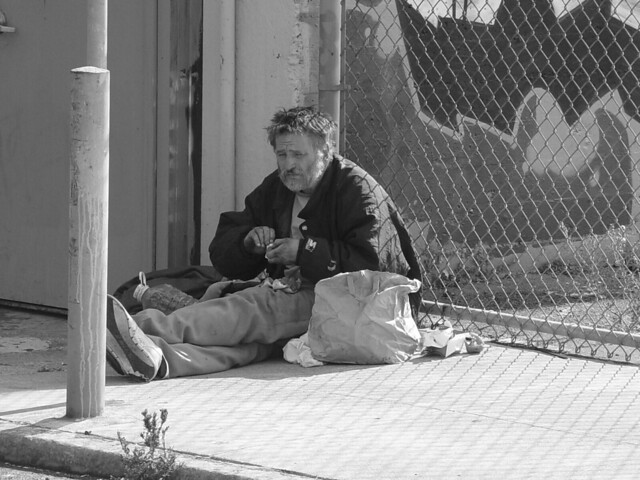
Now I am not generally one to give money to a pan-handler. If I do give something, it’s generally a snack (usually healthy) if I have one on me. This has been met with different responses: scorn, indifference or thankfulness. I have offered a few times to go and buy something to eat or drink but have never been take up on the offer, until today. I regret though, that I may have contributed to, not helped the problem of food insecurity.
Today, I had walked to an appointment along Dalhousie Street in Ottawa (for those of you who know where that is) and was on my way back to work, when I stopped to grab something from my purse and rearrange my things. I was soon confronted by a shabbily dressed young man. Since I was stopped, kneeling over my bag, I was his captive audience. He proceeded to tell me all of his problems, from being kicked out of the shelter down the street because of a fist fight, to not having enough to eat. He also assured me that spending money on drugs was not an issue because he doesn’t use them. I was waiting for him to ask me if I could give him money, but that didn’t seem to surface from the avalanche of words spewing from his mouth. I interjected, “can I buy you something to eat?” He replied with “oh yes, yes, please, I’m so hungry.”
At this point I should maybe provide a little background on food insecurity. The prevailing definition of food security is “a situation that exists when all people, at all times, have physical, social, and economic access to sufficient, safe and nutritious food that meets their dietary needs and food preferences for an active and healthy life.” Food security and insecurity are on opposite ends of a continuum. Food insecurity has different stages of severity starting with not being able to buy and eat what one would like. This gets at issues of quality including variety, safety, nutrient content, and the caveat that foods must last and not go to waste. The next stage involves a decrease in quantity which might or might not be accompanied by hunger. Finally, the most severe stage is the complete absence of food intake (going completely without).
Food security is a basic human right, but from the 2007-2008 Canadian Community Health Survey, 7.7% (961,000) of Canadian households were food insecure. And keep in mind this is for people with a fixed address, unlike homeless people and those in shelters, so the number is likely higher. I imagine this figure will only climb as our (Canadian) income gap rises and worldwide economic problems deepen; unless of course, our social policies change, but that’s a discussion for another day.
Remember that a key part of food security covers quality – we should have access to healthy, nutritious food. Being food insecure is related to decreased quality of foods consumed and nutrient inadequacies, which makes intuitive sense.
I regret that although I was providing food in principle, it was not of the nutritious variety. We went to the nearest restaurant, Garlic Corner, and I said to the guy “get what you like, I’ll pay for it.” He hummed and hawed, something about wanting breakfast down the street because “these guys don’t serve it past noon, and they are really, really slow.” Then it was he didn’t eat meat but didn’t want any of the vegetarian options. Either the choices at Garlic Corner were not healthy enough (which is partially true) or he wanted money instead, of which I am guessing the latter. Anyway, I told him that I had no cash, so he settled on a Nanaimo cake thing and a red bull. All crap. I mulled all of this over on the remaining walk back to the office. What have I done here? Propagated the problem? Should have I stipulated what he order, ordered it for him, went to a better restaurant, what?
What do you think? I tried to help out a fellow human in need, but did I really? Even if I had stipulated what he had ordered, it would have been denigrating. The other alternative would have been to ignore him, pack-up my things and continue on as if I had not seen or heard him. While I have ignored street people in the past, I am growing increasingly uncomfortable with it, trying now to at least acknowledge them as people when I walk by – a smile, node, or hello. I don’t mind providing snacks here and there but I’d almost rather do nothing if it means that the another red bull or Nanaimo cake gets sold and consumed. At the same time, it's food, pretty good tasting food at that. I would imagine that it's pretty hard to be concerned about nutrition when there are so many other problems to deal with. That is the problem.

Pilgrim A, Barker M, Jackson A, Ntani G, Crozier S, Inskip H, Godfrey K, Cooper C, Robinson S, & SWS Study Group (2011). Does living in a food insecure household impact on the diets and body composition of young children? Findings from the Southampton Women's Survey Journal of Epidemiology and Community Health, June 7 : 10.1136/jech.2010.125476
Kirkpatrick SI, & Tarasuk V (2008). Food insecurity is associated with nutrient inadequacies among Canadian adults and adolescents. The Journal of nutrition, 138 (3), 604-12 PMID: 18287374
Friday, September 30, 2011
Evaluating urban planning initiatives to increase active transportation
 |
| Ottawa Sun: Laurier St. bike lane in Ottawa (ON), Canada |
Urban planning and epidemiology need to become better friends. Rigorous epidemiological studies that assess the health impacts of urban planning interventions are desperately needed. These studies can more reliably tell us what works and what doesn’t, and therefore where best to put our hard-earned tax dollars. I’m not sure why they are lacking. Money? Time? I guess they are all good excuses. But in the grand scheme of things, I would settle for even just a simple before-after study – something that I think is more than feasible.
Ottawa recently implemented a segregated bike lane pilot project on Laurier Street, running from Bronson to Elgin Streets. The lanes are blocked off from traffic with concrete curbs, plastic poles, parked cars and planter boxes. New road markings (including those gross green boxes) and signs tell cyclists where they should be. Most on-street parking has been removed and some bylaws have even changed, such as no right turns on a red light, which protect cyclists from absent-minded motorists. The project is part of the City of Ottawa’s plan to become a greener and more sustainable city.
All of this is great news for cyclists (and environmentalists), even though it has received some grumblings from residents and merchants on Laurier Street who have lost parking spots as a result. Since the lanes were open on July 10, 2011, almost 117,000 people have used them (that is, passed a counter at Laurier and Metcalf). Wow, that sounds like a lot of people…but wait a sec…How many cyclists used Laurier before? Maybe the same number of people used Laurier last year from July 10th to September 28th, 2010. So this number really tells us nothing. We have no idea what the ‘success’ of the pilot project is defined as either. Is it a certain percentage increase in the number of users, fewer accidents, more commerce, increase in physical activity, etc.? The main points I am trying to make here are that the city could have at least placed a counter in the same location BEFORE they implemented the project, as well as determined significant outcomes a priori and communicated those to the public. I don’t think it would have been that much more costly.
I’d like to highlight that this would be something that is needed in the very least. These types of designs that use counters to count the number of users before and after are not robust against bias and cannot capture all that we would really like to examine. Here are a few examples why:
- We can only count users and not individuals so likely we are double, triple counting, etc. Perhaps increase in usage is only by those people that already cycle on the road
- If counters are electronic, I'm not sure if they can discriminate between cyclists and people that shouldn't be using the lane (such as skateboarders, motorized scooters, etc.)
- We cannot determine impact on the health outcomes of individuals living nearby, such as increased physical activity or decreased obesity
- Increase/decrease of cycling on Laurier could actually be due to other factors that we have not accounted for or reflect only secular trends (not due to the new lane)
I have had a very hard time finding an urban planning intervention with the intent of increasing active transportation/physical activity, or decreasing obesity, that has been well conducted. There is also the added caveat of residents actually knowing about the change to their environment. For example, if they don’t know about a new bike lane, trail system, or park how can they use them?
A study by Evenson et al (2005) perhaps is a basic model to follow– with, of course, some upgrades (e.g. addition of a control group). They set out to determine if a new rail trail built in Durham North Carolina (US) significantly increased time spent in leisure activity, moderate and vigorous physical activity, and active transportation of residents living nearby.

Participants 18 years or older living within 2 miles of the trail were randomly recruited to participate in two telephone surveys conducted before and after introduction of the trail (n = 366). Questions were largely based on the Centers for Disease Control and Prevention’s Behavioural Risk Factor Surveillance System. The researchers did not find that the new trail had any effect on the outcomes they looked at. There were some issues with the study which may explain why they did not find anything. Some examples include:
- The after measurement occurred just 2 months after the trail opened – this may not have been a sufficient amount of time (e.g. residents may still not have known about it). In fact, 38% of respondents said they weren’t aware of the trail [Correction - this should be 11.3%, 38 was the n]
- The after measurements occurred in November, whereas the before measurements occurred in summer and early fall. In Canada at least, we tend to be outside less as the winter approaches versus in the summer
- Low response and retention rates. The people who responded were likely not representative of the population (they already had high baseline rates of activity). What were the people who didn’t respond like?
There are some other issues that I won’t get into but I think it’s a basic study that could easily be implemented by urban planners, with the help of public health professionals or universities with epidemiology or program evaluation departments (to increase the study’s robustness which is very important)! Who knows, maybe the City of Ottawa has done all of this and we just don't know about it - I'll give them the benefit of the doubt. Regardless, I truly think this is a worthwhile and necessary transdisciplinary endeavour that will benefit society as a whole. And don't get me wrong, I am for increasing biking infrastructure. I just want to make sure we can quantify its benefits and that we do it in the best possible way.
Evenson, K., Herring, A., & Huston, S. (2005). Evaluating change in physical activity with the building of a multi-use trail American Journal of Preventive Medicine, 28 (2), 177-185 DOI: 10.1016/j.amepre.2004.10.020
Wednesday, September 21, 2011
Behavioral economics - a way to fight Big Food?
Eating that double-fudge brownie or entire bag of chips ultimately comes down to individual choice. However, it is becoming more and more apparent that we are not really free to choose – our choices arise from opportunities or barriers that are structured in large part by the places in which we live, work, play, or go to school. The abundance of ultra-processed, energy –dense, nutrient-poor foods that are readily available, heavily marketed, cheap, and tasty, presents a large barrier to many of us in terms of following a healthy diet. How can we counteract this to make healthier foods like fruits and vegetables the more attractive option? I’ve been thinking about this a lot lately, wondering if the only way is to make these foods just as convenient to consume, such as in healthy prepackaged meals, and somehow find the means to heavily market them in the same way as Big Food.

Behavioral economics may be a simpler way – changing the layout of cafeterias, stores, and restaurants to subtly influence people to make the healthy decision.
Smarter lunchrooms is an initiative out of the Behavioral Economics and Nutrition Center at Cornell University concerned with doing exactly this. Their philosophy is that draconian school food policies, like banning junk food from cafeterias, don’t work. Often children will skip lunch, bring in their own snacks, or head to a fast food restaurant. Principal investigators Brian Wansink and David Just think that ‘nudging students toward making better choices on their own, by changing the way their options are presented’ is a better option. I tend to agree.
Although the epidemiologic evidence doesn’t look like it’s strong (most studies appear to be case studies or before-after and I’m not entirely sure of the methodology), I think the results of some of these interventions are worth discussing, especially since most of these are low cost and low effort for the school to implement. Hopefully some larger scale, well designed randomized controlled trials are on the horizon (us epidemiologists can only dream). Here are a few examples from Wansink & Just, as well as their colleagues (virtually verbatim from their website):
- Putting nutritious foods like broccoli at the start of the cafeteria line, rather than in the middle, increased sales by 10-15%
- Switching apples and oranges from a stainless steel pan to a fruit bowl more than doubled fruit sales
- Giving healthy food choices more descriptive names like ‘creamy corn’ rather than ‘corn’ increased sales by 27%
- Moving the chocolate milk behind the plain milk led students to buy more plain milk
- Putting the salad bar in front of the check-out register nearly tripled sales of salads
- When cafeteria staff asked students if they wanted a salad, salad sales increased by a third
- Requiring that desserts such as cookies be paid for in cash (not with lunch tickets or debit cards) led students to buy 71% more fruit and 55% fewer desserts
- Keeping ice cream in a freezer with a closed, opaque lid significantly reduced ice cream sales
I think that something like this could in some way be translated to other shared dining spaces such as cafeterias in workplaces, hospitals, and universities, to name a few. Google has actually shown us that it is feasible. Now whether its employees are healthier for it, I'm not sure if it has, or will ever be formally evaluated. Too bad..Seems like a waste of a good intervention study.
Just D.R.,, & Wansink B (2009). Smarter Lunchrooms: Using Behavioral Economics to Improve Meal Selection Choices:The Magazine of Food, Farm, and Resource Issues, 24 (3)
Thursday, September 1, 2011
Are tightly-knit communities best for obesity prevention?
I am re-posting a guest-post that I wrote in June for my friend and colleague, Travis Saunders, on his blog: 'Obesity Panacea'. I was too lazy then to put the whole thing up on my own blog...Alas, I've come back to it as potential thesis material, so have decided to take the two minutes to format it. You can also view the original post here.
Informal social control
Szreter, S. (2004). Health by association? Social capital, social theory, and the political economy of public health International Journal of Epidemiology, 33 (4), 650-667 DOI: 10.1093/ije/dyh013
I am hoping that researchers and the public at large are starting to get past the ‘blame the victim’ perspective of obesity. True, choice and preference obviously have something to do with it, but we as individuals live and interact in complex environments. Behaviours like sedentarism and eating junk food may be natural responses to opportunities and barriers that are structured by the places in which we live, work, play, or go to school. And not everyone is likely to be equally affected - protected or prone depending on things such as genes, age, sex, socioeconomic status, cultural upbringing, and the like. We need to consider the context in which people live their lives. If not, obesity prevention and treatment efforts are akin to throwing people back into the fire.
Humans, by nature, are social animals, so one such contextual factor that has garnered a lot of attention in the field of place and health is social capital. It refers to networks of social relationships that people have and the associated norms of <warranted> trust and reciprocity (gift giving with the expectation of receiving) (1). Social capital can work at the individual level, but also through collective or group-level mechanisms (2). These group-level workings may be most relevant for the development of obesity, since buying and eating food , as well as being physically active, often (but obviously not always) take place in shared spaces, such as neighbourhoods.
There is already a vast literature demonstrating an association between low collective social capital and adverse health outcomes such as delayed child development, child and adolescent behaviour problems, stress and isolation, violent crime, and increased mortality (3). A newer body of research is emerging now, suggesting that low collective social capital may be related to obesity and even related diseases such as hypertension (4).
Social capital in a collective or community context is often referred to as ‘collective efficacy,’ which is used to describe a number of social processes that may affect health (5). In short, it is the social cohesion (connectedness/togetherness) among neighbours (or members of a community) combined with their willingness to intervene on behalf of the common good.
Okay, so how can that translate into obesity? I’ll try to spare you the jargon as much as I can while still conveying the meaning of these pathways (one of the main criticisms of this area of research is that words and phrases describing concepts, and the meaning of these concepts are not consistently applied). Also, keep in mind that these pathways can interact and overlap.
 |
| Creative Commons Image |
Neighbourhoods that are more cohesive informally enforce social norms (e.g. obeying the law), which may decrease anti-social behaviours such as graffiti, vandalism, illegal dumping, drug-dealing, violence etc (5). By informally it is meant that residents are willing to intervene when they see someone breaking social ‘rules’. This can have an impact on the physical aspect of neighbourhoods, making them more or less aesthetic, as well as on the perception of safety (6, 7). Both may influence resident’s decisions to be active outside (or decisions to let their kids be active outside), as well as decisions by certain groups of people and organizations to move into or out of the neighbourhood (8). For example, a specialized grocery store relocates out of the neighbourhood to a ‘better’ or ‘safer’ location. Neighbourhood residents therefore, no longer have access to this service. Another example is calling the SPCA to complain about a certain neighbor (me) letting their dog poop on one’s property and not cleaning it up. In my defense, that dog poop was from winter – I had no idea Jax went over there to do his business, and the snow covered it up! As a result of this we bought a retractable leash and no longer let Jax off-leash in the backyard (to his chagrin). Maybe now our neighbours do not hesitate as much to let their little girl play in the backyard.
Trustworthiness
Somewhat related to social control is how much residents feel that they can depend on their neighbours, and how dependable neighbours actually are. In a more cohesive neighbouhood this mutual trust is high (9). Parents may feel better about and consequently let their child play outside more often when they know there are other people around to look out for the well-being of the child.
Collective action
Increasing the social connectivity of a neighbourhood facilitates coordinated action (9). Highly cohesive neighbourhoods may have more power to influence physical and social changes within the neighbourhood itself, at higher levels of social organization, such as at municipal and regional levels (I blogged about something similar in a recent post). For example, if neighbourhood members deem that being in a food desert is a problem they may have the collective might to bring about policies that allow farmers markets to locate within the community, thereby improving the accessibility of healthier foods. Another excellent example of this is DIY streets – an initiative to increase pedestrian and cyclist safety, which has also increased (full circle) a sense of community between neighbours on a street in London, England.
Social contagion
“The Chameleon Effect” is a phenomenon that operates at the level of our unconscious – merely perceiving certain behaviours makes us more likely to engage in those behaviours (10). In a more connected community, when we see/hear about people being active outside, or say ordering from an organic food basket, we may be more likely to engage in those behaviours (11). And this may lead to those behaviours becoming a social norm, which thus further reinforces those behaviours. I use the term ‘social contagion’ perhaps loosely, as the spreading of normative and stable healthy behaviours is likely not a fast process.
Richness and density of social ties
In some sense this operates more at the individual level but is relevant to discuss here. The more connections an individual has within the neighbourhood the more access they have to health relevant resources (12). Thus, a person who is isolated within the neighbourhood may not know about easily accessible (and perhaps free) services or amenities such as parks, new grocery stores, etc., or be exposed to health promotion initiatives that are local in scope. Having rich social interactions on a daily basis may also increase well-being and reduce stress. Individuals prone to isolation (like seniors) may benefit from living in a community with high social interaction – neighbours may periodically check in on and provide support, and a recent study has found that seniors living in areas with high social cohesion are less likely to die from stroke (13)
Stress
Again, this functions more at the individual level but can result, at least in some part, from a lack of collective efficacy at the community level. More physical and social neighbourhood disorder may illicit psychological distress <either warranted or unwarranted> (6). Chronic stress has been shown to have direct effects on metabolism and has been linked to obesity (14, 15). Eating may also be used as a coping strategy (15, 16) – I do this to self-medicate before a big presentation.
A few thoughts...
There are certainly some caveats in social capital research, particularly at the group-level (I won’t go into them all but you can read about them in a series of articles published by the International Journal of Epidemiology, called the Social Capital Debate). The literature posits an influence of community social capital on physical activity, healthy eating, and obesity, but it may itself be influenced either by the behaviours themselves (e.g. more people meet outside during a jog), the built environment (e.g. interesting and safe places to walk to), or broader factors such as policies and global social norms. And certainly, the fact that most of this research has been cross-sectional does not help any to untangle the mess. Social capital can also be a bad thing, such as gangs or perpetuating unhealthy behaviours.
So, if we increase community social capital, will that decrease obesity? And how do we increase community social capital? Good questions, I don’t think we have satisfactory answers yet, unfortunately. A discussion for another day perhaps…
References
- Putnam R. Commentary: ‘Health by association’: some comments. International Journal of Epidemiology. 2004; 33(4): 667-671
- Kawachi I, Kim D, Coutts A, Subrmanian SV. Commentary: Reconciling the three accounts of social capital. International Journal of Epidemiology. 2004; 33(4): 682-690
- Szreter S, Woolcock M. Health by association? Social capital, social theory, and the political economy of public health. International Journal of Epidemiology. 2004; 33(4): 650-667
- The influence of geographic life environments on cardiometabolic risk factors: a systematic review, a methodological assessment and a research agenda. Obesity Reviews. 2011; 12(3): 217-230
- Sampson RJ, Raudenbush SW. Earls F. Neighborhoods and violent crime: A multilevel study of collective efficacy. Science. 1997; 277 (5328): 918-924
- Burdette AM, Hill TD. An examination of processes linking perceived neighbourhood disorder and obesity. Social Science & Medicine. 2008; 67(1): 38-46
- Stafford M, Cummins S, Ellaway A, Sacker A, Wiggins RD, MacIntyre S. Pathways to obesity: Identifying local, modifiable determinants of physical activity and diet. Social Science & Medicine. 2007; 65(9): 1882-1897
- MacIntyre S, Ellaway A, Cummins S. Place effects on health: how can we conceptualise, operationalise, and measure them? Social Science & Medicine. 2002; 55: 125-139
- Putnam R. Bowling Alone. Journal of Democracy. 1995; 6(1): 65-78
- Chartrand TL & Bargh JA. The perception-behavior link and social interaction. Journal of Personality and Social Psychology. 1999; 76(6): 893-910
- Cohen DA, Inagami S, Finch B. The built environment and collective efficacy. Health & Place. 2008; 14(2): 198-208
- Bernard P, Charafeddine R, Frohlich KL, Daniel M, Kestens Y, & Potvin L. Health inequalities and place: A theoretical conception of neighbourhood. Social Science & Medicine. 2007; 65(9): 1869-1852
- Clark CJ, Guo H, Lunos S, et al. Neighborhood Cohesion Is Associated With Reduced Risk of Stroke Mortality. Stroke. 2011; 42:1212-1217
- McEwen BS. Protective and damaging effects of stress mediators. The New England Journal of Medicine. 1998; 338(3): 171-179
- Torres SJ & Nowson CA. Relationship between stress, eating behavior, and obesity. Nutrition. 2007; 23(11-12): 887-894
- Rosenkrantz RR, Dzewaltowski DA. Model of the home food environment pertaining to childhood obesity, Nutrition Reviews. 2008; 66(3):123-140
Szreter, S. (2004). Health by association? Social capital, social theory, and the political economy of public health International Journal of Epidemiology, 33 (4), 650-667 DOI: 10.1093/ije/dyh013
Monday, August 29, 2011
Google: dedicated to keeping employees healthy and happy and reducing its ecological footprint
As regular readers and/or Twitter followers are likely well aware, I’m not exactly 100% pro-capitalism. So it may come as a bit of surprise that today’s post gushes over one particular money-making machine: Google.
The Atlantic: Marion Nestle
What Google's Famous Cafeterias Can Teach Us About Health
Good (Environment): Sarah Laskow
Google's Newest Clean Energy Project: Solar Leasing
I think Google's biggest downfall is that it may have plans for world domination...Given these examples, do you think this is a bad thing?
Now, Google has skeletons in the closet like any other business, but a lot of what I’ve read depicts it as a company vested in keeping employees healthy and happy, and dedicated to reducing its ecological footprint. It's business model demonstrates that companies can be sustainable while also profitable; two concepts that I think a lot of libertarians believe are mutually exclusive. Please check out the videos and articles below for a few examples of how socially responsible this company is.
The Atlantic: Marion Nestle
What Google's Famous Cafeterias Can Teach Us About Health
Good (Environment): Sarah Laskow
Google's Newest Clean Energy Project: Solar Leasing
I think Google's biggest downfall is that it may have plans for world domination...Given these examples, do you think this is a bad thing?
Tuesday, August 23, 2011
Safety and biking infrastructure - segregated vs marked bike lanes
Hopefully I will be back to a more or less regular blog posting schedule now that I am back from my trip overseas. I went to Dublin (Ireland) and Edinburgh (Scotland) for a few weeks of vacation and a couple days of conferencing. I was lucky enough to get to do some biking both inside and outside of the city (the city being Edinburgh). Today’s post is more of a reflection on biking culture and infrastructure in Ireland and Scotland versus here in Canada. I was only there for a short while so I am sure locals will have much more insight than I; don’t be afraid to let me know if I’ve got something wrong.
Both Dublin and Edinburgh appear to make extensive use of on-street bike lanes. These are generally shared with bus lanes and are often painted red, which makes them impossible to miss by motorists. I noticed continuity of markings and signage (i.e. I as a cyclist knew where I was supposed to be at most times) and priority for cyclists (e.g. areas allocated for cyclists in front of motorists at intersections – see picture below). Bike lanes also continued on more rural roads, along with pedestrian islands to slow traffic, which you don’t see here in Canada. Even though streets were busy and I had to ride on the opposite side of the road I did not feel scared to be on the road, perhaps because motorists are more cyclist-savvy and no one yells or honks at you.
 |
| On-street marked bike lanes in Dublin, Ireland |
The infrastructure in these cities has made me wonder if on-street marked bike lanes are the way to go. Don’t get me wrong, I am not against segregated lanes, but on-street marked lanes would likely be cheaper, more direct, and make fewer people angry (e.g. merchants who lose parking spaces). Changing our cycling culture requires, at the very least, making friends not enemies (I'll talk about this in an upcoming post).
I’m just not sure if on-street marked lanes are safer for the average person and I doubt that parents would be more willing to let their children commute anywhere on them versus segregated lanes or a sidewalk. At the same time, some segregated bike lanes can be dangerous because motorists can’t see you. For example, in Hull, there is a National Capital Commission off-road pathway that crosses three roundabouts; it is blocked to traffic by a wall until you have to cross each roundabout. Motorists coming into and out of the roundabout are looking for other cars and often nothing else. Cyclists are quicker than pedestrians and may appear out of nowhere to motorists. I have had a few close calls. Being on the street makes you seen and forces motorists to more or less treat you like a car. This is why I cycle on the road in this area, even with motorists motioning to me in some sort of code that I think means I should be using the ‘perfectly good bike lane’ beside me.
I think therefore that a comparison of segregated and on-street marked bike lane safety is beside the point (the evidence shows that both may be beneficial compared to unmodified road ways, and that the sidewalk is the worst). I guess the appeal of segregated lanes is that they may induce feelings of safety, whether real or imagined which could motivate people to actively commute. My point is that we may want to investigate more wide-spread use of on-street marked bike lanes that are highly visible as in Dublin and Edinburgh, and/or with buffer zones as in New York City (see picture below), as these could improve both real and imagined safety in the same way, improve route directness, be more cost-effective, and piss fewer people off.

Reynolds, C., Harris, M., Teschke, K., Cripton, P., & Winters, M. (2009). The impact of transportation infrastructure on bicycling injuries and crashes: a review of the literature Environmental Health, 8 (1) DOI: 10.1186/1476-069X-8-47
Subscribe to:
Posts (Atom)